
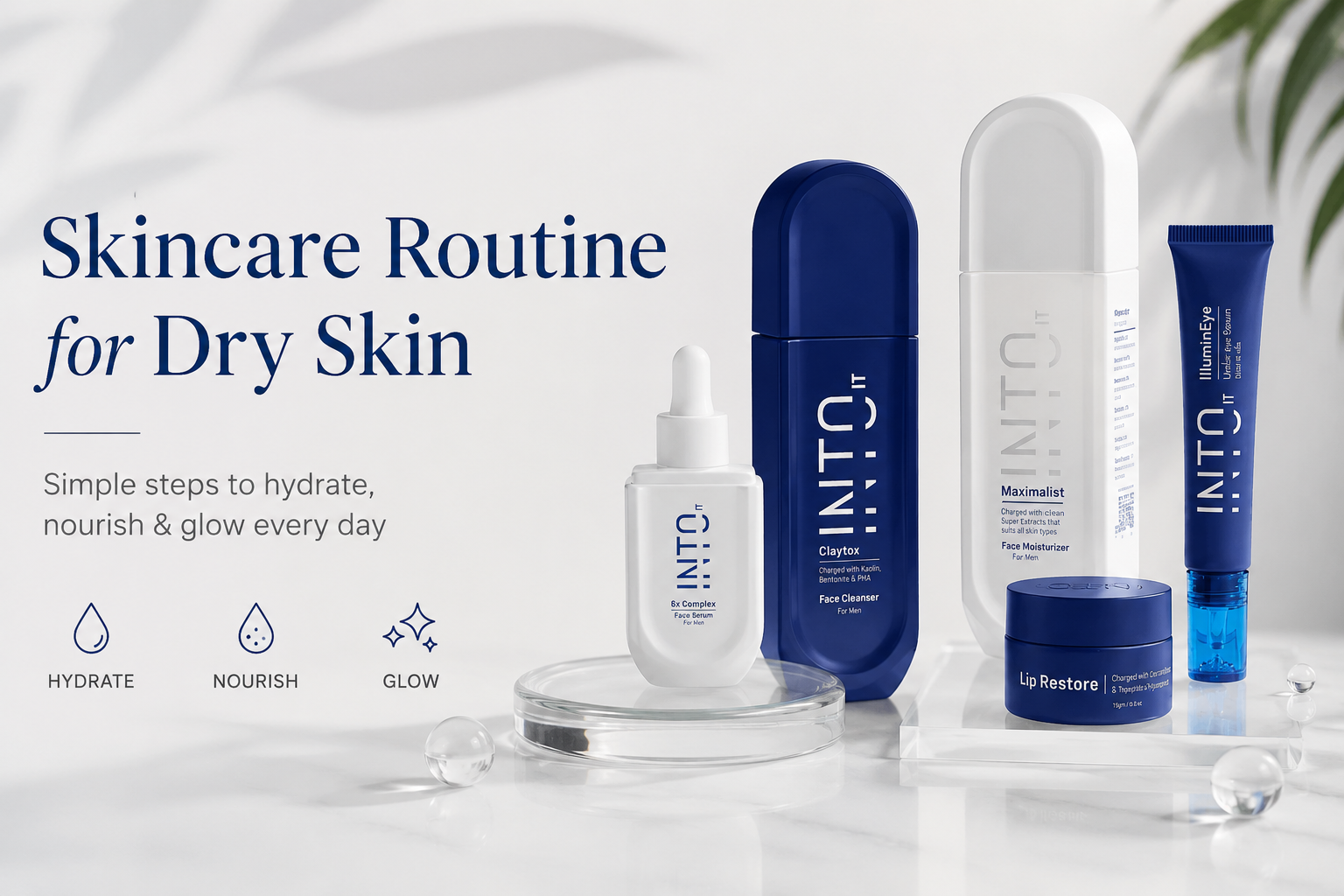
Skincare Routine for Dry Skin
Dry skin, medically known as xerosis, affects over half of adults globally, with prevalence similar between men and women. For men with genuinely dry skin, the issue is not a lack of effort. It is usually a lack of understanding about what dry skin actually needs at the biological level, which is fundamentally different from what oily or combination skin needs.
This guide is built specifically for men whose skin is consistently dry, not just occasionally dehydrated. It explains the clinical science behind why skin becomes dry, what the evidence-based treatment actually requires, and the exact routine that addresses dry skin at its root cause rather than just masking the symptoms temporarily.
What Dry Skin Actually Is, Biologically
Dry skin occurs when the skin barrier, the outermost layer that retains moisture and blocks irritants, is structurally compromised. This barrier depends on three essential lipids working together: ceramides, cholesterol, and fatty acids. Research confirms that all three are required for proper barrier function, and applying only one or two of these lipid types delays healing rather than fully resolving it.
Ceramides make up approximately 50 percent of the skin's outer barrier lipid content, making them the single most significant component. When ceramide levels are reduced or structurally abnormal, which clinical research links to dry skin and conditions like atopic dermatitis, the barrier develops microscopic gaps that allow water to escape through a process called transepidermal water loss, or TEWL, at an accelerated rate.
This is the core mechanism to understand: dry skin is not simply "lacking moisture." It is a structural deficiency in the lipid matrix that normally holds moisture in. This is why simply applying water-based hydration without addressing the underlying lipid deficiency provides only temporary relief.
Why Some Moisturizers Fail Dry Skin Completely
This explains a frustration many men with genuinely dry skin experience: using a moisturizer regularly without seeing meaningful improvement.
Clinical evidence indicates that formulations lacking the physiological lipids the barrier needs achieve only transient hydration, typically lasting four to eight hours, whereas ceramide-containing formulations maintain hydration and TEWL reduction for substantially longer. A basic moisturizer built primarily around water and glycerin, without the lipid components the barrier structurally requires, provides short-term comfort without addressing the underlying structural deficiency.
This is also why the ratio of ingredients matters, not just their presence. Research has established that a physiological lipid ratio of 3:1:1, ceramides to cholesterol to free fatty acids, has been clinically validated to provide superior barrier repair compared to single-component or improperly ratioed formulations. This ratio is not an arbitrary cosmetic convention. It mirrors the native architecture of the stratum corneum itself, which is why formulations replicating it perform meaningfully better than those that do not.
The Clinical Evidence for Ceramide-Based Treatment
Multiple independent clinical studies confirm the effectiveness of ceramide-based barrier repair for dry skin specifically.
Clinical studies show that ceramide-containing moisturizers significantly improve skin hydration within 24 hours and help restore barrier integrity over a sustained period. A study evaluating a ceramide-containing topical product reported TEWL reductions of approximately 10 percent alongside hydration improvement lasting up to 72 hours, substantially outperforming the 4 to 8 hour window of non-lipid formulations.
Research published in Experimental Dermatology found that in trials involving patients with dry skin, significant improvement in skin hydration measurements occurred after four weeks of consistent ceramide treatment, with ceramide treatment showing quicker and more pronounced effects in more severe presentations of dry skin compared to milder cases.
A study published in the Journal of Drugs in Dermatology confirmed that restoration of the skin barrier, particularly through topically applied mixtures of ceramides, cholesterol, and essential fatty acids, strengthens a compromised skin barrier and alleviates the symptoms and discomfort associated with skin barrier disorders.
This body of evidence is the foundation for why ceramide-based products, rather than simple humectant-only moisturizers, are the appropriate treatment for genuinely dry skin.
The Dry Skin Routine
Step 1 - Cleanse Gently Without Stripping
The first principle of any dry skin routine is to stop removing what little natural barrier function remains. Harsh cleansers, particularly bar soap with its high pH between 9 and 11, strip the skin's already-compromised lipid barrier further with every wash, working directly against the barrier repair you are trying to achieve.
Dermatological guidance for barrier repair consistently emphasises patting, not rubbing, skin dry with a soft towel after cleansing, since rubbing creates mechanical friction that further disrupts already-fragile dry skin.
The INTOIT Claytox Cleanser is formulated to clean without this stripping effect. While it contains clay, which might seem counterintuitive for dry skin, the formula includes Chamomile Flower Extract, Aloe Vera, and Sodium PCA specifically to maintain skin comfort and moisture balance during cleansing. The Gluconolactone PHA at 2 percent provides gentle exfoliation that dry skin needs to clear dead cell buildup, but at a far gentler intensity than stronger AHAs, which can be too aggressive for compromised, dry skin barriers.
Step 2 - Apply Treatment to Damp Skin
Dermatological guidance for barrier repair recommends applying a treatment product containing niacinamide or ceramides to damp skin, immediately after cleansing, while residual moisture is still present on the surface. This timing matters because it gives hydrating and barrier-supporting ingredients a moisture source to work with from the moment of application.
The INTOIT 6x Complex Face Serum contains Niacinamide at 2 percent, which is directly relevant to dry skin through a specific, well-documented mechanism: niacinamide does not just sit on the skin, it actively stimulates the skin's own ceramide biosynthesis. Research published by Tanno and colleagues confirmed that nicotinamide increases biosynthesis of ceramides as well as other stratum corneum lipids, directly improving the epidermal permeability barrier from within the skin's own cellular machinery, not just through externally applied lipids.
This means the serum step for dry skin is doing genuine reparative work, not just delivering temporary surface hydration. Apply two to three drops on slightly damp skin and allow it to absorb before the next step.
Step 3 - Seal with a Ceramide-Rich Moisturizer
This is the most critical step for dry skin specifically. Clinical guidance for barrier repair consistently recommends sealing everything in with a rich, fragrance-free moisturizer containing ceramides, cholesterol, and fatty acids, the same three lipid types confirmed necessary for proper barrier function.
The INTOIT Maximalist Moisturizer contains the full ceramide complex, Ceramide NP, AP, and EOP, the three ceramide types most consistently referenced in clinical barrier repair research, alongside Cholesterol and Phytosphingosine, completing the structural lipid profile that dry skin's compromised barrier specifically requires. The Xylitylglucoside, Anhydroxylitol, and Xylitol hydration complex provides additional sustained moisture retention beyond what the lipid components alone deliver.
For very dry skin, applying a slightly more generous layer, particularly at night when the skin has more uninterrupted time to absorb and utilise the formula, supports faster barrier recovery. Allantoin in the same formula contributes additional soothing benefit, relevant for dry skin that has become sensitised or irritated from prolonged barrier compromise.
Step 4 - Protect Lips With the Same Barrier Logic
Lips, having no oil glands at all, are in a permanent state of structural vulnerability comparable to severely dry facial skin. The INTOIT Lip Restore SPF Lip Balm applies the same barrier-repair logic to lip tissue specifically, combining Hyaluronic Acid for humectant hydration, Squalane for occlusive sealing, and Ceramide NP for the structural lipid support that lip tissue otherwise has no mechanism to produce on its own.
Timeline for Visible Improvement
Setting accurate expectations matters significantly for dry skin treatment, since the structural barrier rebuilding process takes measurably longer than simple surface hydration.
Within 24 hours: Ceramide-containing moisturizers show measurable hydration improvement, though this initial improvement reflects surface-level moisture retention rather than full barrier restoration.
Within 1 to 2 weeks: Clinical studies on more compromised, contact-dermatitis-affected skin showed significant hydration improvement within this window, reflecting how more severely compromised barriers respond more rapidly to consistent ceramide treatment.
Within 4 weeks: Studies involving milder, non-pathological dry skin showed significant hydration improvement specifically after four weeks of consistent ceramide treatment, a meaningfully longer timeline than more severe cases, which is an important and counterintuitive finding worth understanding: milder dry skin sometimes takes longer to show measurable improvement than more severe presentations.
Most people: General clinical guidance for barrier repair indicates most people see improvement within a few days, with complete recovery taking two to four weeks depending on the severity of the underlying damage.
The consistent theme across this research is that genuine barrier repair, as opposed to temporary surface hydration, requires sustained, consistent application over multiple weeks. A few days of inconsistent use will not produce the structural rebuilding that clinical studies document.
When to Add Extra Barrier Support
For particularly dry areas or during periods of intensified dryness, such as Indian winter months in northern regions or extended exposure to air conditioning, dermatological guidance for barrier repair sometimes recommends adding a thin layer of an occlusive ingredient like petrolatum over specifically dry areas at night, on top of the standard routine, for additional moisture-sealing protection during the most vulnerable overnight hours.
This is an optional addition rather than a standard daily step, appropriate specifically when standard moisturizing is not sufficient during periods of heightened environmental dryness.
When to See a Dermatologist
Most dry skin responds well to a consistent, ceramide-focused routine. However, dermatological guidance is consistent that professional consultation is appropriate if symptoms worsen after two weeks of barrier repair efforts, if signs of infection develop including increased pain, warmth, or oozing, if you have severe eczema or dermatitis flares, or if your skin does not improve after four to six weeks of consistent care.
A dermatologist can assess whether an underlying condition, such as atopic dermatitis or another dermatological condition affecting barrier function, requires prescription treatment beyond what over-the-counter barrier repair products can address.
Common Questions About Dry Skin in Men
Why does my skin still feel dry even though I moisturize every day?
This usually indicates that the moisturizer being used lacks the specific lipid composition, ceramides, cholesterol, and fatty acids in the correct ratio, that dry skin's compromised barrier structurally requires. A humectant-only moisturizer provides temporary surface hydration lasting only a few hours, while a ceramide-deficient barrier continues losing water at an accelerated rate regardless of how often you apply it. Switching to a formulation with the full ceramide complex addresses the underlying structural issue rather than just adding more temporary surface moisture.
Is dry skin in men different from dry skin in women?
The underlying biology of barrier dysfunction is the same regardless of gender. However, men's skin is naturally thicker and produces more sebum on average due to testosterone, which means genuinely dry skin in men, when it occurs, often indicates either a stronger genetic predisposition toward lower sebum production or external factors like over-cleansing, hot water exposure, or harsh products actively stripping the skin's natural barrier function despite the underlying tendency toward oiliness.
Can dry skin and oily skin coexist on the same face?
Yes, though this is technically a slightly different phenomenon than purely dry skin. It typically reflects dehydration, a water content deficiency, occurring alongside normal or even elevated sebum production, rather than true dryness from genuinely low sebum output. True dry skin, xerosis, reflects an actual structural lipid deficiency in the barrier, which is the focus of this guide and the routine described here.
Should I exfoliate if I have dry skin?
Gently, yes, but with caution. Dead skin cell buildup can itself contribute to the rough, flaky appearance associated with dry skin, and removing it supports better absorption of barrier-repairing ingredients. However, dry skin's compromised barrier is more vulnerable to irritation from aggressive exfoliation. The gentle Gluconolactone PHA in the Claytox Cleanser, used at a 2 percent concentration specifically chosen for daily tolerability, provides this exfoliation benefit without the irritation risk that stronger AHAs or physical scrubs can pose to already-compromised dry skin.
Does the Indian climate make dry skin worse, even though India is generally hot and humid?
Yes, particularly in specific contexts. Air-conditioned indoor environments, where many Indian professionals spend significant portions of their day, create artificially low humidity that accelerates TEWL regardless of outdoor conditions. Northern Indian winters bring genuinely lower humidity and colder temperatures that worsen dry skin. Hard water, common across many Indian cities, also degrades barrier lipids with each wash, compounding genuine dry skin tendencies regardless of the broader climate being generally humid.
How is treating dry skin different from treating dehydrated oily skin?
True dry skin requires sustained lipid replenishment through ceramide-rich formulations applied consistently, since the underlying issue is a structural deficiency in barrier lipids that needs ongoing replacement. Dehydrated oily skin often responds well to a combination of humectants for water content and lighter barrier support, since the underlying sebum production is typically adequate or even elevated, and the issue is specifically water retention rather than a structural lipid deficiency. Both benefit from the Maximalist Moisturizer's ceramide complex, but men with true dry skin may benefit from a more generous, consistent application given the more significant underlying lipid deficiency.
Final Word
Dry skin is a structural condition, not simply a lack of surface moisture. The skin barrier depends on ceramides, cholesterol, and fatty acids working together in the correct ratio, and clinical research consistently shows that addressing only one or two of these components, or relying on humectant-only hydration without lipid replenishment, produces only temporary relief.
The evidence-based approach is straightforward: cleanse without stripping the already-compromised barrier further, apply Niacinamide to actively stimulate the skin's own ceramide production, and seal with a moisturizer containing the full ceramide, cholesterol, and fatty acid complex that the barrier structurally requires.
Genuine barrier repair takes weeks, not days, of consistent application. The studies are clear on this timeline, and expecting faster results often leads to abandoning an approach that was working before it had time to show its full effect.
Shop the INTOIT routine for dry skin here.