
Can Men Use Women's Skincare Products?
This is one of the most common questions in men's grooming, and the honest answer is more nuanced than a simple yes or no. Dermatologists are split on the framing, but they largely agree on the underlying facts. Active ingredients work the same way regardless of gender. The skin biology underneath, however, genuinely differs in ways that affect what formulation works best.
This guide gives the full, accurate picture. What actually differs between male and female skin. What the ingredient science says. Why some dermatologists argue gender-specific products are unnecessary while others argue formulation still matters. And what this means practically for whether you should use whatever skincare is available in your household.
The Short Answer
You can use most women's skincare products without any harm to your skin. The active ingredients, niacinamide, hyaluronic acid, antioxidants, peptides, AHAs, work identically in male and female skin at the cellular level. There is no scientific mechanism by which a well-formulated active ingredient becomes ineffective or harmful simply because it was marketed toward a different gender.
What differs is not whether the ingredients work, but whether the formulation, texture, and concentration are calibrated for your specific skin's needs. This is where genuine, biology-based differences come in.
What Dermatologists Actually Say
There is real disagreement among dermatologists on how to frame this question, and it is worth presenting both positions honestly.
One position, represented by board-certified dermatologist Dr Kristina Collins, holds that there is absolutely no scientific reason for skincare products to be gender specific, because none of the biological differences between male and female skin lead to major variation in the ideal skincare regimen. Her recommendation is that everyone should select skincare based on skin type rather than sex, focusing on evidence-backed ingredients like vitamin C, hyaluronic acid, niacinamide, and retinoids that benefit everyone regardless of gender.
The opposing position, represented by formulation specialists and other dermatologists, holds that while the active ingredients are universal, the textures, concentrations, and delivery systems should differ because male and female skin have measurably different physical characteristics that affect how products perform.
Both positions are factually grounded. The disagreement is not about whether biological differences exist between male and female skin, which is well documented, but about whether those differences are significant enough to require separate product lines versus simply better formulation choices within shared, evidence-based ingredient categories.
What Actually Differs Between Male and Female Skin
Dermatologists across multiple sources consistently identify the same core set of biological differences, all primarily driven by hormones.
Thickness and Collagen Density
Male skin is approximately 20 to 25 percent thicker than female skin, and contains up to 25 percent greater collagen density, according to research cited by the American Dermatology Association. This is driven by testosterone's stimulating effect on dermal fibroblasts. The result is skin that is firmer and more structurally resilient, which delays the appearance of fine lines, but also presents a formulation challenge: traditional, rich creams designed for drier female skin often sit on the surface of a man's thicker dermis rather than penetrating effectively, leaving a greasy residue without delivering active ingredients where they are needed.
Sebum Production
Testosterone drives significantly higher sebum production in men through direct stimulation of androgen receptors in the sebaceous glands. This is one of the most consistently cited differences across dermatological sources and the one with the most direct formulation implication. A heavy, oil-rich moisturizer formulated for naturally drier female skin can be genuinely counterproductive on oilier male skin, potentially contributing to congestion and breakouts that a lighter formula would not cause.
Skin Acidity and Hydration Patterns
Men's skin tends to be more acidic than women's skin. This relates to differences in natural hydration patterns. Women's skin tends to be drier than men's, in part because men's skin's higher acidity and oil content provide more natural barrier function. As a result, some dermatologists note that women statistically tend to need moisturizer more consistently than men, though this is a population-level pattern rather than a universal rule, and individual variation within each gender is significant.
Shaving-Related Skin Stress
This is the difference most clearly tied to a genuine product need rather than a marketing distinction. Daily shaving of facial hair leads to irritations, nicks, cuts, and ingrown hairs that female skin generally does not experience to the same degree, since most women do not shave their faces. This creates a legitimate need for products specifically formulated to support skin that undergoes regular blade-based mechanical stress, something a standard moisturizer not designed with this in mind may not adequately address.
Where the "It's All Marketing" Argument Is Right
A significant amount of what differentiates men's and women's skincare on the shelf has nothing to do with the underlying science. Black bottles, masculine branding language, and "all-in-one" simplicity claims are marketing strategies targeting a specific audience rather than reflections of an actual skin need. Many products marketed separately for each gender contain similar or identical active ingredient profiles, with the primary differences being fragrance, packaging colour, and branding language rather than formulation substance.
A cosmetic chemist's assessment of the market confirms that the biggest differences tend to be in product aesthetics and sensorial profiles rather than fundamental formulation, with men's products tending toward lighter textures and more functional packaging primarily for marketing and usability reasons rather than biological necessity.
This means a significant proportion of "women's" skincare on the market would work just as well for men, and vice versa, because the active ingredients inside are the universal, evidence-based actives that work the same way in any skin.
Where Formulation Genuinely Matters
The disagreement among dermatologists narrows considerably when the conversation moves from "do men need gender-specific products" to "does formulation matter for results." Most experts agree it does, even if they disagree on whether this requires explicitly gendered marketing.
Texture and weight: Given men's higher sebum production and thicker skin, lighter, faster-absorbing formulas generally perform better than rich, heavy creams, regardless of what the product is labelled or marketed as. This is true whether the product comes from a "men's" or "women's" range. A lightweight gel-cream with the right actives will outperform a heavy, occlusive cream for most men's skin, independent of branding.
Concentration and delivery for thicker skin: Because male skin is thicker, the same concentration of an active ingredient may need to be delivered through a formulation specifically designed for deeper penetration to achieve comparable results to what that concentration achieves in thinner skin. This is a formulation science point, not a marketing one.
Shaving-specific support: Products formulated with the understanding that the user shaves regularly, anticipating the barrier disruption and irritation this causes, provide more directly relevant support than a generic moisturizer not designed with this stressor in mind.
What This Means Practically
If your partner's moisturizer happens to be lightweight, contains evidence-based actives at meaningful concentrations, and is fragrance-free or lightly fragranced, there is no scientific reason it would not work well on your skin. The active ingredients function identically regardless of which gender the product was marketed toward.
If your partner's moisturizer is a rich, heavy cream formulated for significantly drier skin, it may feel uncomfortable, sit on the surface of your thicker, oilier skin, and potentially contribute to congestion, not because of anything inherently "wrong" with using a women's product, but because the texture is mismatched to your skin's actual needs.
The more useful question is not "is this product for men or women" but "is this product's texture and ingredient profile suited to my specific skin type." A man with naturally dry skin might do perfectly well with a richer cream regardless of its marketing. A woman with naturally oily skin would likely do better with a lighter formula regardless of its marketing, too.
Why INTOIT Is Formulated Specifically for Indian Men
Understanding this nuanced picture is exactly why INTOIT's formulation choices are deliberate rather than purely a marketing exercise.
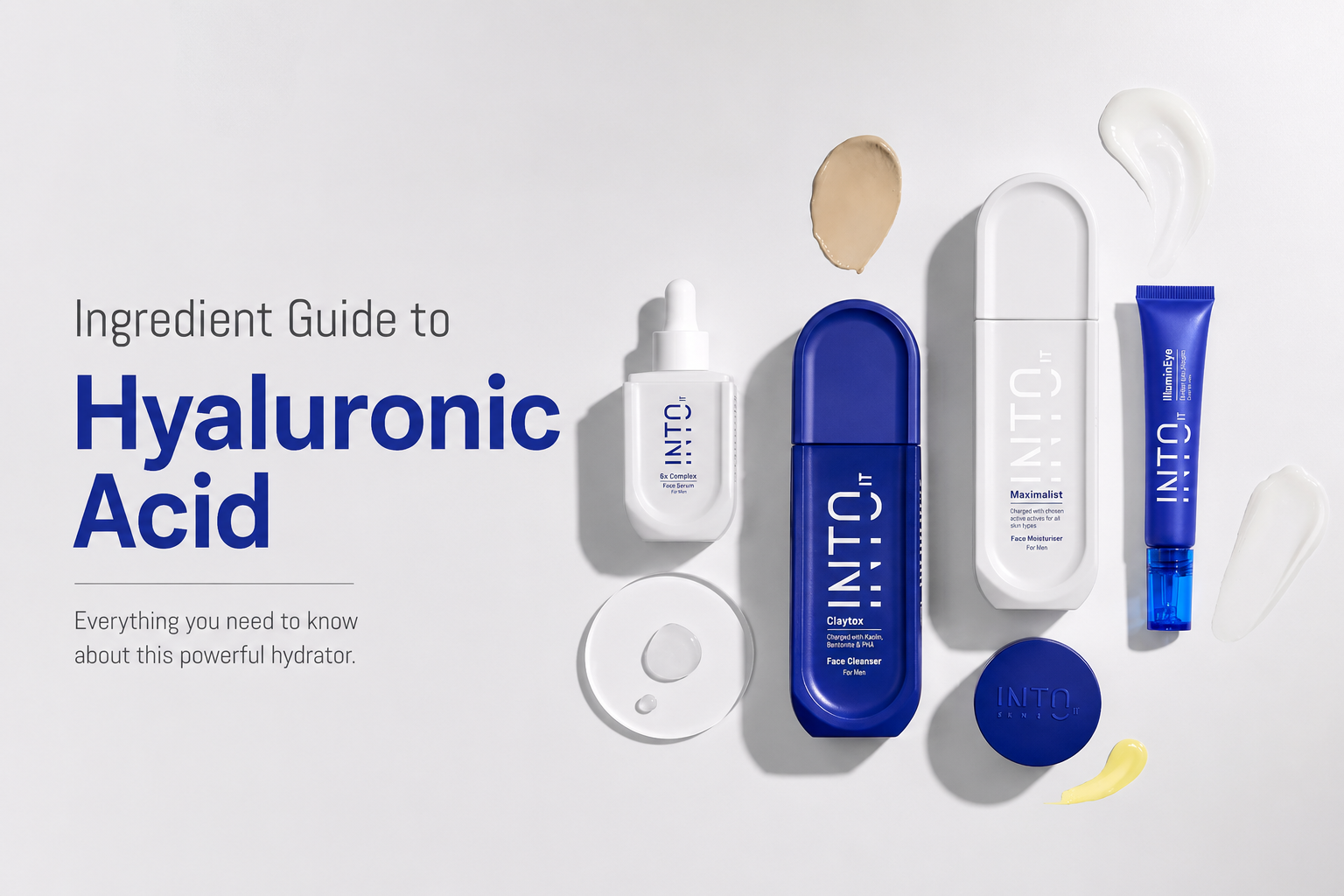
The INTOIT Claytox Cleanser and INTOIT Maximalist Moisturizer are lightweight, fast-absorbing formulas, a direct response to the higher sebum production and thicker skin that characterise male skin biology. This is not branding language. It reflects the genuine formulation requirement that dermatologists across multiple sources agree on: men's skin generally performs better with lighter textures than the richer creams often formulated for drier skin types.
The INTOIT 6x Complex Face Serum uses a low-viscosity, penetration-optimised base specifically because male skin's greater thickness requires more effective delivery systems to carry active ingredients to the depth where they work. This addresses the legitimate penetration challenge that thicker male skin presents, which formulation science, not marketing, identifies as a real consideration.
None of this means the active ingredients themselves, Niacinamide, peptides, AHAs, ceramides, work differently because a man is using them. They do not. What it means is that the delivery system and texture are calibrated specifically for the skin that is most likely to be using them, which is precisely the formulation-level difference that credible dermatological sources agree matters.
Common Questions About Men and Women's Skincare
Will using a women's product harm my skin in any way?
No, provided the product does not contain an ingredient you are individually allergic or sensitive to, which is a possibility with any product regardless of gender marketing. There is no mechanism by which an active ingredient becomes harmful to male skin simply because it was formulated for a female audience.
Why do some men's products feel different from women's products even with similar ingredients?
This usually comes down to texture, fragrance, and packaging choices that are partly aesthetic and partly responsive to the average difference in sebum production and skin thickness between the genders. A men's product with a gel-cream texture and a women's product with a rich cream texture may share several active ingredients while feeling and performing differently due to the base formulation.
Is it true that men's skin ages more slowly because of greater collagen density?
Yes, this is supported by dermatological research. Greater collagen density does correlate with intrinsic ageing happening somewhat more slowly in male skin compared to female skin of the same chronological age. However, this advantage is significantly affected by UV exposure, pollution, and lifestyle factors. Men who do not protect their skin from sun damage and pollution often lose this biological advantage to extrinsic ageing factors that affect both genders similarly.
Does this mean gendered skincare marketing is entirely meaningless?
Not entirely. While a significant portion of gendered marketing reflects aesthetic preference rather than biological necessity, some genuine formulation differences, particularly around texture suited to sebum levels and support for shaving-related skin stress, do have a real biological basis. The honest position is that gender marketing oversimplifies a more nuanced reality: skin type and individual needs matter more than gender, but gender does correlate, on average, with certain skin characteristics that inform good formulation choices.
Should I choose products based on gender or skin type?
Skin type, consistently, according to dermatologists across the sources reviewed here. A man with naturally oily, thick skin and a woman with naturally oily, thick skin have more in common in terms of what their skin needs than two men with very different skin types. Use gender as a loose, population-level signal if you are unsure where to start, but prioritise your actual skin type, concerns, and how a product feels and performs on your skin specifically.
Final Word
The honest answer to whether men can use women's skincare products is yes, with an important caveat. The active ingredients work identically regardless of gender marketing. What differs, and what genuinely matters for results, is whether the formulation's texture, weight, and delivery system suit your skin's actual characteristics, which for most men means lighter, faster-absorbing formulas suited to higher sebum production and thicker skin.
This is not an argument for or against gendered branding. It is an argument for choosing skincare based on what your skin actually needs rather than what the label says. A well-formulated product with evidence-based active ingredients, appropriate texture for your skin type, and no individual allergens will work for you regardless of who else it is marketed to.
INTOIT is formulated specifically with male skin biology in mind, not as a marketing exercise, but because lighter, more penetrating formulations genuinely suit the thicker, oilier skin that characterises most Indian men. That is the formulation logic, grounded in the same science this entire guide has covered.
Explore the INTOIT range formulated for men's skin here.