
Ingredient Guide to Niacinamide
Niacinamide is one of the most extensively researched active ingredients in dermatology and skincare. Unlike many ingredients that appear in formulas based on trend or marketing, niacinamide has decades of peer-reviewed clinical evidence behind it. It works on multiple skin concerns simultaneously through distinct, well-understood biological mechanisms.
For Indian men dealing with oily skin, enlarged pores, dark spots, post-shave marks, and uneven skin tone, niacinamide is one of the most directly relevant ingredients available in topical skincare.
This guide explains what niacinamide is, exactly how it works at the cellular level, what the clinical evidence says about each of its benefits, why it matters specifically for Indian skin, and where to find it in the INTOIT range.
What Is Niacinamide?
Niacinamide, also called nicotinamide, is a water-soluble form of vitamin B3. It is an essential nutrient that the body requires for cellular energy production and DNA repair. In the context of skincare, it is used as a topical active ingredient with multiple documented effects on skin health.
Unlike many skincare actives that target a single concern, niacinamide works through several independent biological pathways simultaneously. A comprehensive literature review published in Cosmoderma describes it as a powerful antioxidant and anti-inflammatory agent with the additional advantage of rehabilitating the skin barrier and enhancing extracellular matrix integrity. It reduces oxidative stress, hyperpigmentation, and sebum production while improving barrier function, fine lines, and overall skin appearance.
Niacinamide is a precursor to nicotinamide adenine dinucleotide, or NAD+, a coenzyme involved in over 400 enzymatic reactions in cells, including those critical for skin health, energy production, and DNA repair. This central role in cellular function is part of why its effects on skin are so broad.
How Niacinamide Works: The Six Mechanisms
Each benefit of niacinamide is driven by a distinct, separately documented biological mechanism. This is what separates it from ingredients that claim multiple benefits based on inference. The evidence for each mechanism below is independently published.
Mechanism 1 - Inhibiting Melanosome Transfer to Reduce Pigmentation
This is niacinamide's most thoroughly documented mechanism in dermatological research and the most relevant to Indian men.
Melanin, the pigment that gives skin its colour, is produced in specialised cells called melanocytes. It is then packaged into organelles called melanosomes and transferred to keratinocytes, the surrounding skin cells, where it deposits and creates visible pigmentation. Hyperpigmentation, dark spots, post-inflammatory marks, and uneven skin tone all result from excess melanin being transferred and deposited in this way.
Niacinamide does not inhibit melanin synthesis itself. Its mechanism is further downstream. It inhibits the transfer of melanosomes from melanocytes to keratinocytes, preventing the excess melanin that is produced from being deposited in the skin surface cells where it becomes visible.
The landmark study establishing this mechanism was published by Hakozaki and colleagues in the British Journal of Dermatology in 2002. The research demonstrated that niacinamide gave 35 to 68 percent inhibition of melanosome transfer in a coculture model and significantly decreased hyperpigmentation and increased skin lightness compared with vehicle alone after four weeks of clinical use. The study's conclusion was that niacinamide is an effective skin lightening compound that works specifically through melanosome transfer inhibition.
This mechanism is particularly relevant to Indian men for two reasons. First, higher baseline melanin levels and highly reactive melanocytes make Indian skin more prone to pigmentation from any trigger, including UV exposure, inflammation from acne, and shaving. Second, the melanosome transfer inhibition mechanism works independently of melanin synthesis, meaning it addresses pigmentation through a different pathway than alpha arbutin, kojic acid, and glutathione, all of which inhibit synthesis. Using niacinamide alongside synthesis-inhibiting brighteners addresses the problem from two independent angles simultaneously.
Clinical trials at concentrations of 2 to 5 percent have been confirmed to lighten hyperpigmentation within 8 to 12 weeks of consistent daily use, with continued application and sunscreen required to maintain results.
Mechanism 2 - Reducing Sebum Production
This is the mechanism most relevant to Indian men with oily skin and enlarged pores.
Niacinamide modulates sebaceous gland activity by inhibiting the transfer of lipids to the surface of sebocytes, the cells within the sebaceous glands that assemble and secrete sebum. This reduces the rate at which sebum exits the gland and reaches the skin surface.
The 2006 study by Draelos, Matsubara, and Smiles published in the Journal of Cosmetic and Laser Therapy is the most widely cited evidence for this effect. It found that topical 2 percent niacinamide significantly reduced the sebum excretion rate after four weeks of use. A 2021 study confirmed the advantage of niacinamide in acne and sebum control, with clinical investigations showing measurable reduction in sebum production and improvement in skin texture. Multiple studies report a measurable drop in sebum excretion after four to eight weeks of 2 to 5 percent niacinamide use.
The key point for men with oily skin is that this is cellular-level regulation of sebum production rate, not surface oil removal. Surface cleansers remove oil after it has already been produced and reached the skin surface. Niacinamide reduces how much oil is produced in the first place. These are complementary approaches that work better together than either alone.
Mechanism 3 - Strengthening the Skin Barrier
Niacinamide directly stimulates the synthesis of ceramides, free fatty acids, and cholesterol in keratinocytes. These are the three primary lipid components of the skin barrier. A well-functioning skin barrier retains moisture, protects against environmental irritants, and prevents the compensatory sebum overproduction that occurs when the barrier is compromised.
Research published in the British Journal of Dermatology by Inoue and colleagues confirmed that nicotinamide leads to an increase in ceramide and free fatty acid levels in the epidermis, improving the skin's epidermal permeability barrier. A comprehensive literature review in Cosmoderma confirms this is validated by randomised clinical trials.
For Indian men, where hard water, pollution, UV exposure, and the humid-to-AC cycle consistently deplete barrier ceramides, niacinamide's direct ceramide synthesis stimulation provides active barrier repair support alongside the external ceramide replenishment from the moisturizer. Both approaches are complementary.
Mechanism 4 - Reducing Transepidermal Water Loss
As a direct consequence of barrier strengthening, niacinamide reduces transepidermal water loss. Research consistently confirms that niacinamide increases ceramide and free fatty acid levels and reduces TEWL.
Reduced TEWL means the skin retains more moisture. This keeps the skin hydrated, which reduces the dehydration that makes fine lines more visible and the skin more sensitive and reactive. It also removes one of the triggers for compensatory sebum overproduction: the sebaceous glands respond to barrier compromise and moisture loss by producing more oil. Reducing TEWL through barrier repair reduces this compensatory sebum stimulus.
Mechanism 5 - Anti-Inflammatory Activity
Niacinamide has broad anti-inflammatory activity through multiple pathways. Practical Dermatology, citing in vitro studies, confirms that niacinamide reduces secretion of cytokines, including interleukin-8, which is produced by keratinocytes in response to pathogens such as Cutibacterium acnes. It also decreases lysosomal release and mast cell degranulation, and reduces UVB-induced prostaglandin E2 production by keratinocytes.
For men with oily skin and acne-prone skin, this anti-inflammatory activity is directly relevant. The inflammatory response that drives papule and pustule formation, and the post-inflammatory hyperpigmentation that follows, is partially suppressed by consistent niacinamide use. A 2021 study confirmed that niacinamide helps promote an even complexion, quells redness, and manages inflammatory skin responses.
Mechanism 6 - Improving Fine Lines and Skin Elasticity
A 2006 study published in the British Journal of Dermatology found that 4 percent niacinamide improved skin elasticity and reduced the appearance of fine lines and enlarged pores after 12 weeks of use. A randomised controlled trial referenced in published literature confirmed that topical niacinamide promotes improvement in skin quality including reduction of fine lines and wrinkles.
The mechanism behind this anti-ageing effect is connected to niacinamide's role as a NAD+ precursor. NAD+ is critical for cellular energy metabolism and DNA repair. Adequate cellular NAD+ levels support the activity of fibroblasts, the cells responsible for collagen production, which contributes to skin firmness and resistance to fine line formation over time.
Why Niacinamide Matters Specifically for Indian Men
The six mechanisms described above are relevant to most people. For Indian men specifically, several of these mechanisms address the most prevalent and persistent skin concerns with unusual directness.
Pigmentation from multiple sources: Indian skin has highly reactive melanocytes. UV from daily commutes, inflammation from breakouts, and irritation from shaving all trigger excess melanosome production. Niacinamide's melanosome transfer inhibition mechanism is particularly relevant for Indian skin because it addresses the pigmentation at the transfer stage rather than the synthesis stage, providing a complementary pathway to the synthesis-inhibiting brighteners in the Maximalist Moisturizer.
Oiliness driven by androgens and climate: Higher testosterone levels drive higher sebum production in men. Indian heat and humidity amplify this further. Niacinamide's sebum regulation mechanism provides sustained reduction in oil production over weeks that no surface-based cleanser or mattifying product can match.
Barrier damage from multiple daily stressors: Hard water, pollution, UV, and the humid-to-AC cycle all deplete the skin barrier's ceramide content daily. Niacinamide's ceramide synthesis stimulation actively supports barrier repair from the inside at the cellular level, complementing the external ceramide replenishment from the Maximalist Moisturizer.
Post-acne and post-shave inflammation: Niacinamide's documented anti-inflammatory activity reduces the inflammatory response that drives both acne lesion formation and the post-inflammatory hyperpigmentation that follows. For Indian men where PIH persists for months after even minor inflammation, this is a meaningful mechanism.
What Concentration of Niacinamide Do You Need?
Concentration determines how significant the effect is. This is one of the areas where different products vary most.
Research confirms that meaningful improvements in oiliness and pore appearance are visible within 2 to 4 weeks at concentrations as low as 2 percent. The Draelos et al. study that established sebum reduction used 2 percent niacinamide. The Hakozaki pigmentation study used 5 percent. Clinical trials confirming hyperpigmentation lightening used concentrations of 2 to 5 percent daily.
The evidence-supported range for daily topical use is 2 to 10 percent. At 2 percent, meaningful improvements in sebum control, pigmentation, barrier function, and skin tone are documented. Higher concentrations in the 5 to 10 percent range produce more pronounced effects on oil control and texture, with some studies showing maximum benefit at 5 percent for comprehensive multi-benefit effects.
Concentrations above 10 percent are occasionally used but carry a higher risk of skin flushing and irritation without proportionally greater clinical benefit compared to the 5 to 10 percent range.
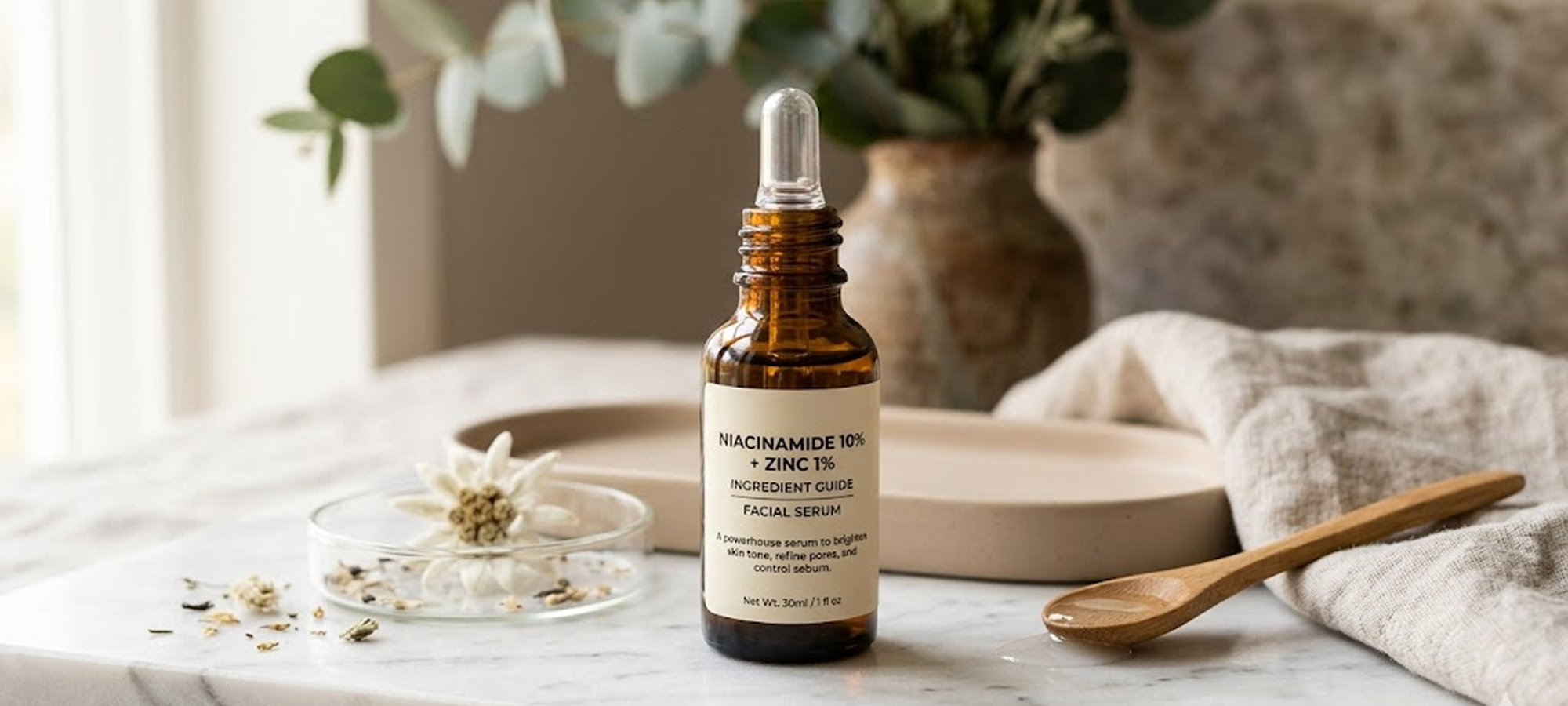
The INTOIT 6x Complex Face Serum contains Niacinamide at 2 percent. This is the clinically validated concentration established in the most cited sebum reduction and pigmentation research. In a serum formulation, the low-viscosity base carries niacinamide deeper into the skin than a moisturizer would, maximising its effectiveness at this concentration.
How to Use Niacinamide Correctly
Application Order
Niacinamide in a serum should be applied after cleansing on slightly damp skin, before the moisturizer. Applying it after the moisturizer reduces penetration because the moisturizer's occlusive layer partially blocks smaller serum molecules from passing through.
The correct order is: Cleanser, then serum with niacinamide, then moisturizer.
Morning and Night
Niacinamide is suitable for both morning and night use. It is not photosensitising, unlike AHAs and some other actives. Using it twice daily produces the most consistent reduction in sebum production and the most sustained melanosome transfer inhibition.
Pairing with Other Actives
Niacinamide works well alongside most other active ingredients. It is particularly complementary with:
- AHAs (Glycolic Acid, Mandelic Acid): AHAs exfoliate the surface layer that accumulates pigmented cells. Niacinamide reduces the rate of new pigmentation being deposited in those cells. Together they address existing and incoming pigmentation simultaneously. Niacinamide's anti-inflammatory activity also moderates any irritation that AHAs can cause.
- Clay cleansers: Clay removes excess sebum from pores mechanically. Niacinamide reduces how much sebum is produced. Both address the same root problem through complementary mechanisms.
- Brightening actives (Alpha Arbutin, Glutathione, Kojic Acid): These inhibit melanin synthesis. Niacinamide inhibits melanosome transfer. Using both together addresses pigmentation at two independent points in the process.
- Peptides: Peptides support collagen synthesis. Niacinamide supports barrier function and reduces inflammation. Both contribute to overall skin quality improvement without interference.
What to Expect and When
Early improvements in skin texture and sebum control are typically visible within 2 to 4 weeks of consistent daily use. Visible brightening of dark spots and post-inflammatory marks takes 4 to 8 weeks. Improvement in barrier function and reduced reactive sensitivity develops progressively over 4 to 8 weeks. Full anti-ageing benefits including improved elasticity and reduced fine lines are seen at 8 to 12 weeks of consistent use.
The studies showing the most significant results used 8 to 12 week treatment periods. Consistency matters more than concentration within the evidence-supported range.
Where Niacinamide Fits in the INTOIT Routine
The INTOIT 6x Complex Face Serum contains Niacinamide at 2 percent alongside five other active complexes. Applied after the Claytox Cleanser and before the Maximalist Moisturizer, it delivers niacinamide at the point in the routine when skin absorption is highest.
Why the serum is the right delivery format: A serum's lightweight, low-viscosity base carries niacinamide through the outer skin barrier more effectively than a moisturizer's heavier formulation. The effects on melanocytes, sebocytes, and keratinocytes all require the niacinamide to reach those cells, which are in the deeper layers of the epidermis. Serum delivery at this depth produces more significant results than the same concentration in a moisturizer.
Why the combination works: The Claytox Cleanser removes excess surface sebum and pollution that would otherwise reduce serum absorption. The Maximalist Moisturizer seals in the serum's active ingredients, provides its own brightening actives through a different mechanism, and supplies the ceramide external replenishment that niacinamide is simultaneously stimulating internally. Each product creates the right conditions for the next one's actives to perform.
What Niacinamide Cannot Do
Being accurate about limitations is as important as documenting benefits.
Niacinamide does not inhibit melanin synthesis directly. The Hakozaki study confirmed this explicitly. It has no effect on tyrosinase activity in isolated melanocytes. Its brightening mechanism is entirely through melanosome transfer inhibition. This is why it works best alongside synthesis-inhibiting brighteners like Alpha Arbutin rather than instead of them.
Niacinamide cannot permanently shrink pores. It reduces sebum production, which reduces the internal pressure that stretches pores over time. And it improves skin surface clarity and texture, which reduces how prominently pores stand out visually. But the genetic baseline of pore size is not changed by niacinamide or any topical ingredient.
Niacinamide's effects on pigmentation are reversible. Clinical sources confirm that the lightening effect requires continued application and sunscreen to maintain. If niacinamide use is discontinued and UV exposure continues, melanosome transfer resumes at its previous rate and pigmentation gradually returns. This is a reason to treat niacinamide as an ongoing routine ingredient rather than a finite treatment.
Niacinamide alone does not fully address advanced ageing. Its contribution to fine line improvement and elasticity is documented but moderate compared to dedicated collagen-stimulating peptides. For men specifically concerned with structural ageing, the peptide complexes in the 6x Complex Face Serum are the primary anti-ageing actives, with niacinamide providing a supporting role through barrier and inflammation management.
Common Questions About Niacinamide
Is niacinamide safe for daily use?
Yes. Niacinamide is one of the best-tolerated active ingredients in skincare. It is non-photosensitising, suitable for all skin types including sensitive skin, and documented as safe for twice-daily use at the concentrations used in topical formulas. It does not require the gradual introduction period that AHAs or retinoids typically need.
Can I use niacinamide if I have sensitive or reactive skin?
Yes. Niacinamide is often recommended for sensitive skin because its anti-inflammatory activity reduces reactivity rather than increasing it. It does not cause the initial adjustment sensitivity that some other actives produce. It is one of the safest starting points for men introducing active ingredients into their routine for the first time.
Is niacinamide the same as niacin?
No. Niacin and niacinamide are both forms of vitamin B3 but they behave differently on the skin. Niacin, also called nicotinic acid, can cause skin flushing when applied topically in high concentrations. Niacinamide does not cause flushing and is the form used in skincare products for its documented, specific skin benefits.
How long should I use niacinamide before seeing results?
Surface improvements in skin texture and early reduction in midday oiliness are typically visible within 2 to 4 weeks. Meaningful brightening of dark spots takes 4 to 8 weeks. The full range of niacinamide's documented benefits, including elasticity improvement and sustained fine line reduction, requires 8 to 12 weeks of consistent daily use. The clinical studies that produced the most significant results used treatment periods of this length.
Does niacinamide interact badly with any other ingredients?
No well-documented incompatibilities exist with the ingredients in the INTOIT range. An older concern about niacinamide interacting with vitamin C to produce a yellow compound called niacin has been addressed in subsequent research. At the concentrations and formulation conditions used in modern skincare products, this interaction does not occur at a level that is relevant to the product's performance or safety. Niacinamide pairs effectively with AHAs, ceramides, peptides, and brightening actives.
Can niacinamide completely eliminate dark spots?
Over 8 to 12 weeks of consistent use alongside sunscreen, niacinamide produces measurable, visible lightening of hyperpigmentation. Whether spots completely eliminate depends on their depth and how long they have been present. Surface pigmentation, including fresh post-acne marks and UV-induced spots, responds well to sustained niacinamide treatment. Deeper pigmentation that has migrated into the dermis, known as melanin incontinence, is more resistant and may require dermatological intervention for complete resolution.
Final Word
Niacinamide earns its reputation as one of the most useful ingredients in evidence-based skincare. It is not a trend ingredient. It has over two decades of peer-reviewed research across multiple independent study groups, published in leading dermatological journals, confirming its effectiveness for sebum control, pigmentation, barrier repair, inflammation reduction, and skin quality improvement.
For Indian men, the combination of androgen-driven oiliness, UV and inflammation-driven pigmentation, and daily barrier stress from pollution, hard water, and environmental cycling makes niacinamide one of the most specifically relevant active ingredients available.
It does not overpromise. It does not work instantly. But used consistently at clinically validated concentrations, in the right delivery format, combined with complementary ingredients, it produces measurable and visible improvement across the concerns that most Indian men are actually dealing with.