
How to Repair a Damaged Lip Barrier (Peeling, Stinging, Cracking)
If your lips peel, sting or crack even though you use lip balm, the problem is usually a damaged lip barrier. The barrier is the thin outer layer of lip skin that keeps moisture in and irritants out. When it breaks down, lips lose water faster, feel tight, flake and hurt.
To repair a damaged lip barrier:
-
Stop what is causing the damage. That means licking, picking and biting your lips, and any product that stings.
-
Seal your lips with a plain, thick ointment such as petroleum jelly, several times a day and before bed.
-
Add moisture and barrier ingredients: humectants such as hyaluronic acid or glycerin, plus ceramides and squalane.
-
Protect them from the sun with an SPF 30 or higher lip balm.
-
Give them 2 to 3 weeks. If there is no clear improvement by then, see a dermatologist.
The rest of this post explains each step and what to do if it does not work.
What the lip barrier is, and how to tell it is damaged
Lip skin is thinner than the skin on the rest of your face and has very few oil glands, so it cannot make much of its own protection. That is why lips dry out first when the weather turns, when you are dehydrated, or when you use harsh products on them.
A healthy barrier holds water in. A damaged one lets it escape, and lets irritants reach tender skin. Your lips usually tell you which problem you have:
|
What you notice |
What it usually means |
|---|---|
|
Peeling or flaking |
The top layer is drying out and lifting off |
|
Stinging or burning when you apply balm |
The barrier has gaps, or the product is irritating |
|
Tightness, especially after eating or washing your face |
Lips are losing water faster than they can hold it |
|
Cracks or splits, sometimes with bleeding |
Dryness has gone deep enough to break the skin |
|
Sore, split corners of the mouth |
Often a separate problem (see the section on when to see a doctor) |
If you want to understand how it got this bad, read Chapped Lips in Men: Why It Happens. This post is about the fix.
Step 1: Stop what keeps damaging the barrier
Nothing you apply will work while the damage continues. Check these first:
-
Licking. Saliva evaporates quickly and leaves lips drier than before. Apply balm when you feel the urge to lick.
-
Picking or peeling flakes. Pulling skin off tears healthy skin underneath and reopens cracks. Let flakes soften under balm and come off on their own.
-
Biting. It keeps lips from healing.
-
Scrubs and rough cloths. Do not scrub lips that are peeling, cracked or stinging.
-
A product that stings. The American Academy of Dermatology (AAD) says burning, stinging or tingling means a product is irritating your lips, so stop using it. Fragrance and strong flavourings are common culprits.
-
Dry air and mouth breathing at night. A humidifier in the bedroom can help.
Step 2: Seal the lips with a plain, thick ointment
Sealing is the most important repair step. An ointment forms a thin layer over the lips so water stays in while the barrier recovers.
The AAD recommends a thick ointment such as white petroleum jelly for very dry lips, because ointments seal in water longer than waxes or oils. It advises applying balm several times a day and before bed.
-
Apply a thin layer after brushing your teeth, after meals and before sleep.
-
Keep the same plain product for a couple of weeks. Changing products often makes it hard to know what is helping.
-
Look for fragrance-free products with petrolatum, mineral oil, dimethicone, ceramides or shea butter.
Step 3: Add the ingredients lips are missing
A sealing layer keeps water in, but it does not add any. Once the worst of the stinging has settled, a balm with these ingredients helps lips hold moisture on their own:
-
Humectants such as hyaluronic acid and glycerin draw water into the skin. How Hyaluronic Acid Keeps Your Lips Hydrated explains how this works on lips.
-
Ceramides are fats that are naturally part of the skin barrier. Ceramide NP is a common one in lip care.
-
Squalane is a light, skin-friendly oil that softens without a greasy feel.
The best combination has a humectant to bring water in, an occlusive to keep it there, and ceramides to support the barrier.
Step 4: Protect healing lips from the sun
Sun exposure adds stress to lips that are already damaged. Use a lip balm with SPF 30 or higher before you go out, and reapply about every 2 hours while outdoors, which is the AAD’s advice. The AAD recommends SPF 30 or higher for lips.
If you want the detail on what the numbers mean, read SPF 15 vs SPF 30 vs SPF 50: How Much Sun Protection Do Your Lips Need?. For why lips need SPF at all, see Why SPF Lip Balm Is Important.
Step 5: Help from the inside and the room
-
Drink enough water. It will not fix lips on its own, but dehydration makes dry lips worse.
-
Use a humidifier at night, especially if you sleep with your mouth open.
-
Do not hold metal objects such as paperclips or jewellery against your lips.
How long does it take to repair a lip barrier?
Most chapped lips heal within 2 to 3 weeks with good self-care, according to the AAD. This is a rough guide, not a promise:
|
When |
What you may notice |
|---|---|
|
First few days |
Less tightness and stinging as lips stay sealed |
|
End of week 1 |
Less peeling, and cracks start to close |
|
Weeks 2 to 3 |
Lips feel comfortable and look smoother |
|
After 3 weeks |
No clear improvement means it is time to see a dermatologist |
When it is not just the barrier: see a doctor
Self-care is for ordinary dryness. See a dermatologist if:
-
Your lips are no better after 2 to 3 weeks of consistent care.
-
The corners of your mouth are red, split or crusted. This can be an infection such as a yeast infection.
-
You get a rash, swelling or burning after using a particular product, which can be an allergic reaction.
-
You have blisters or tingling sores, which can be cold sores.
-
You have a rough, dry, scaly patch, especially on the lower lip, that does not heal. The AAD describes actinic cheilitis, caused by long-term sun damage, as a precancerous condition that leaves lips dry and scaly.
Final word: seal, support, protect and give it time
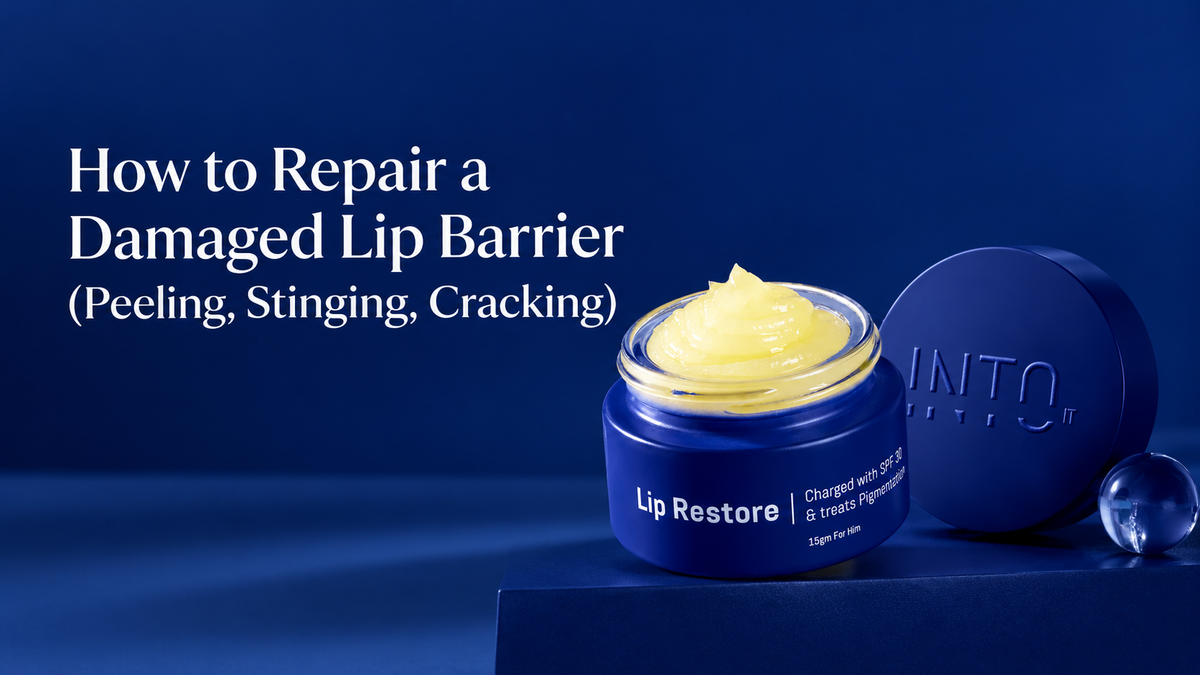
Repairing a damaged lip barrier is simple, but it takes consistency: stop licking and picking, seal lips with a plain ointment, add moisture and ceramides once the stinging settles, and protect them from the sun. When your lips are comfortable again, an SPF lip balm for men keeps the barrier supported day to day. INTOIT Lip Restore SPF Lip Balm has SPF 30 and pairs hyaluronic acid, ceramide NP and squalane with petrolatum and plant waxes, in a lightweight, non-glossy finish that is vegan and paraben-free. It contains peppermint oil for a light cooling feel, so hold off while your lips are raw or cracked and use plain ointment until they have healed.
Frequently asked questions
Can I use Vaseline to repair my lip barrier?
Yes. The AAD recommends a thick ointment such as white petroleum jelly for very dry lips. It seals in moisture well, but on its own it has no SPF and does not add moisture, so use an SPF lip balm in the day.
Why does my lip balm sting?
Stinging, burning or tingling usually means the product is irritating your lips, or that the barrier is so damaged that even mild ingredients reach sensitive skin. Stop using it until your lips have healed, and go back to a plain ointment.
Should I exfoliate peeling lips?
Not while they are peeling, cracked or stinging. Seal them and let the flakes come off on their own. Once lips are healed, gentle exfoliation is optional and should not be a daily habit.
Does drinking more water fix dry lips?
It helps, but it is rarely enough alone. Lips lose moisture from the surface, so you also need to seal them and protect them from sun and wind.
Can I wear SPF lip balm while my lips are cracked?
Yes, if it does not sting. Sun adds stress to damaged lips. If your SPF balm stings on cracked lips, use plain ointment until they heal, then go back to SPF.
Is a damaged lip barrier permanent?
No. For most people the barrier recovers in a few weeks once the cause stops and the lips are sealed and protected.