
How Pollution Damages Men's Skin
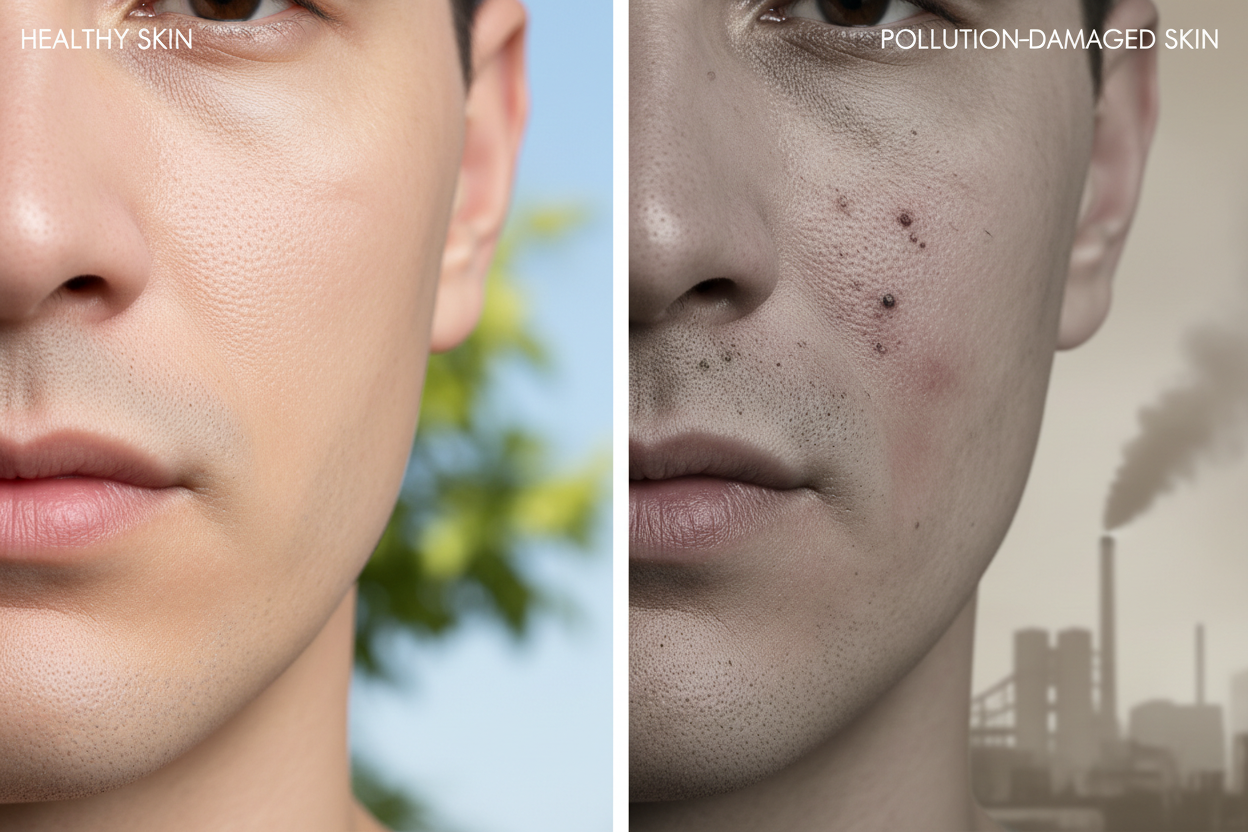
Most men know that pollution is bad for their lungs. Very few understand what it is doing to their skin every single day. The damage is not visible the way a sunburn is visible. It accumulates slowly, quietly, and consistently. By the time it becomes noticeable as dullness, dark spots, premature lines, or persistent breakouts, years of harm have already been done.
This guide explains the exact biological mechanisms through which air pollution damages your skin, why Indian men face a particularly high pollution load, and what the right skincare approach needs to do about it.
What Air Pollution Is Made Of
Understanding the damage starts with understanding what you are actually exposed to.
Air pollution is not a single substance. It is a complex mixture of components, each with different particle sizes and different ways of interacting with the skin. Research published in clinical dermatology literature identifies the main categories as particulate matter, polycyclic aromatic hydrocarbons, ozone, nitrogen dioxide, sulphur dioxide, and volatile organic compounds.
Particulate matter is classified by size. PM10 refers to particles smaller than 10 micrometres. PM2.5 refers to particles smaller than 2.5 micrometres. PM0.1 refers to ultrafine particles below 0.1 micrometres. The smaller the particle, the deeper it can penetrate. PM2.5 in particular has been shown in research published in the Journal of the American Academy of Dermatology to penetrate compromised skin barriers and infiltrate intact skin through hair follicles and sweat glands.
For Indian men living in cities, the relevance of this is direct. Indian metro cities including Delhi, Mumbai, and Bengaluru regularly record PM2.5 levels that place them among the most polluted urban environments in the world. This is not seasonal. In many Indian cities, elevated pollution levels are a year-round reality rather than a temporary condition.
The Four Ways Pollution Damages Your Skin
1. Oxidative Stress and Free Radical Damage
This is the primary and most well-documented mechanism through which pollution harms the skin.
When pollution particles land on the skin surface, they generate reactive oxygen species, commonly called free radicals. Free radicals are unstable molecules that damage anything they come into contact with. They attack lipids in the skin cell membranes, proteins in the skin structure, and DNA in skin cells.
Research from a comprehensive review of 132 studies, published in the JAAD Reviews journal, identifies PM2.5, ozone, and nitrogen dioxide as key triggers of reactive oxygen species production that overwhelm the skin's natural antioxidant defences. Once antioxidant defences are overwhelmed, the oxidative damage cascades.
The visible results of this process include:
-
Dullness and flat, grey-looking skin as cell function degrades
-
Uneven pigmentation as melanocytes respond to oxidative stress
-
Loss of collagen as structural proteins are damaged by free radicals
-
Premature fine lines and wrinkles from accumulated protein damage
-
Persistent low-grade inflammation that disrupts tonal uniformity
The skin does have natural antioxidant enzymes, including glutathione and superoxide dismutase, that neutralise free radicals before they attack cellular components. But in highly polluted environments, the rate of free radical generation exceeds the skin's capacity to neutralise them. Chronic exposure means this is not a one-time overload. It is a daily deficit that compounds over months and years.
2. Skin Barrier Damage and Increased Transepidermal Water Loss
The skin barrier is the outermost layer of the skin, made of skin cells held together by lipid molecules including ceramides, cholesterol, and fatty acids. Its job is to hold moisture in and keep environmental damage out.
PM2.5 directly disrupts this barrier. Research published in PMC confirms that PM2.5 exposure inhibits the production of filaggrin and other epidermal barrier proteins that are essential for maintaining barrier integrity. When these proteins are suppressed, the barrier develops microscopic gaps. Water escapes through these gaps in a process called transepidermal water loss. Environmental irritants and pollutants enter through the same gaps.
The practical consequences for Indian men are significant. A compromised barrier means your skin loses moisture faster, regardless of how much water you drink or how much moisturizer you apply. It means pollution particles penetrate more easily, causing more inflammation and oxidative damage. And it means the skin becomes more reactive, more sensitive, and harder to keep in a healthy state.
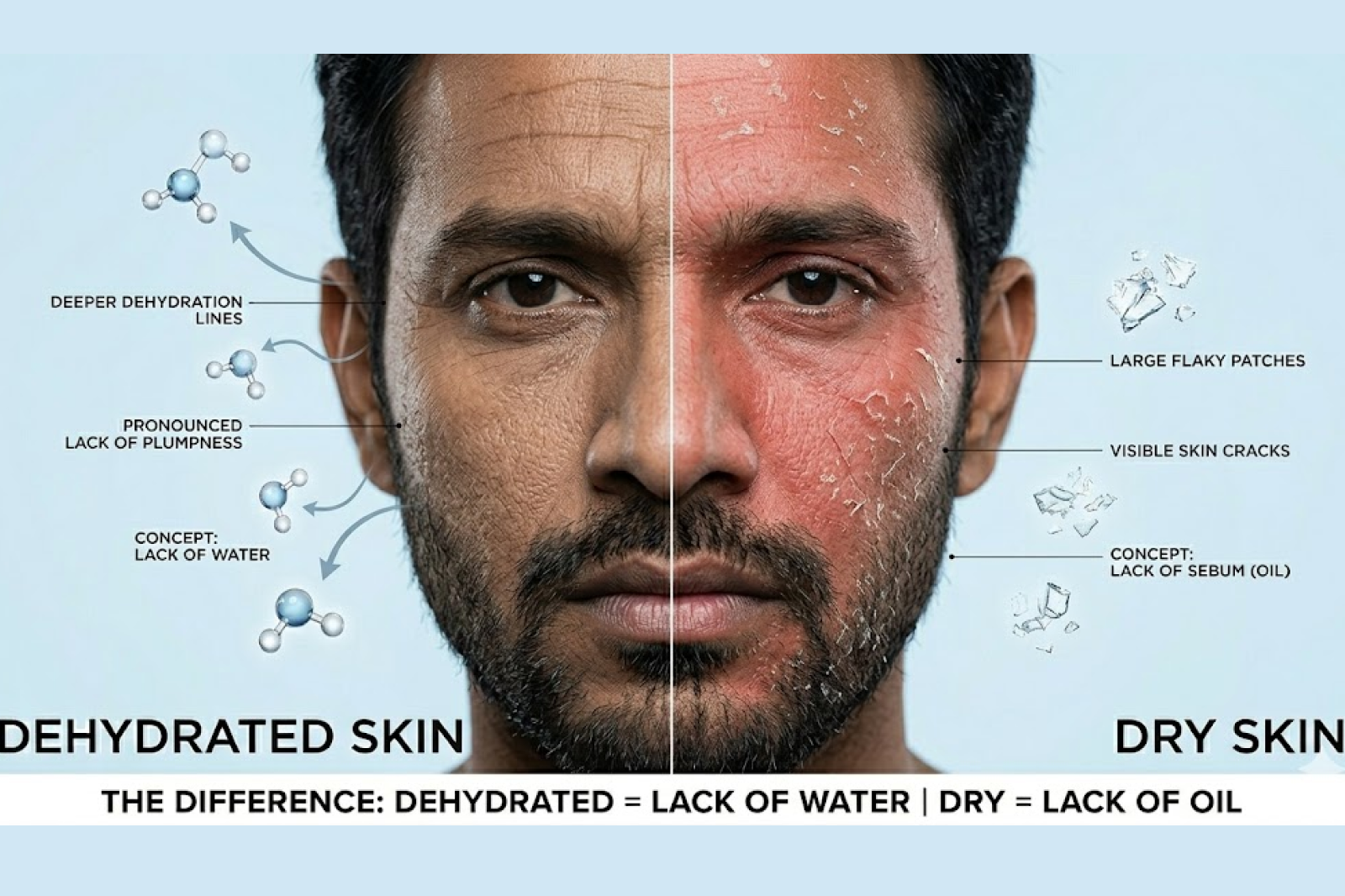
This is also why men who live in polluted cities often experience a cycle where the skin is simultaneously oily and dehydrated. The barrier damage accelerates water loss, triggering the sebaceous glands to produce more oil to compensate. You get oiliness on the surface and dehydration underneath.
3. Pigmentation and Accelerated Ageing
Multiple large-scale epidemiological studies have shown that exposure to PM2.5 and PM10 is associated with increased pigmented spots and more prominent wrinkles. This is not a theoretical connection. It has been documented in population studies comparing skin ageing patterns in urban versus rural populations with different pollution exposure levels.
The mechanism behind pollution-induced pigmentation involves two pathways. First, the oxidative stress generated by pollution particles activates melanocytes, the cells that produce melanin, leading to excess melanin production that deposits unevenly as dark spots. Second, pollution activates the aryl hydrocarbon receptor in skin cells, a pathway that regulates both pigmentation and skin barrier function. When this receptor is chronically activated by pollution, it contributes to both uneven tone and barrier disruption simultaneously.
For Indian men, who already have highly reactive melanocytes due to higher baseline melanin levels, this dual-pathway activation means pollution causes faster and more prominent pigmentation than it would in skin with lower melanin reactivity.
The collagen damage from chronic oxidative stress contributes to premature skin ageing by degrading the extracellular matrix proteins, including collagen, fibronectin, and elastin, that give skin its structure and firmness. This produces fine lines and loss of skin resilience that appear earlier than they would in cleaner environments.
4. Inflammation and Acne
PM2.5 has been shown in laboratory research to increase sebum production and inflammatory biomarkers in skin cells. It activates specific inflammatory pathways, including NF-kB signalling, that increase the production of inflammatory cytokines. This low-grade inflammation is one of the mechanisms through which pollution worsens acne in men with oily or acne-prone skin.
The combination of increased sebum production triggered by pollution-induced barrier damage, pore clogging from pollution particle deposition in hair follicles, and heightened inflammatory activity creates exactly the conditions that drive persistent breakouts. Men who have managed their acne effectively often find it harder to control in cities with higher pollution levels. This is not coincidence. It is a predictable biological outcome.
Why Indian Men Face a Higher Pollution Load
The challenge for Indian men is not just that pollution is damaging skin. It is that the scale of exposure is significantly higher than most skincare advice accounts for.
Several Indian cities consistently rank among the most polluted in the world by PM2.5 measurements. The WHO's guidelines for safe annual average PM2.5 exposure is 5 micrograms per cubic metre. Many Indian cities record annual averages that are ten to twenty times this level. During winter months in northern cities, levels spike further, sometimes reaching conditions classified as severe or emergency by pollution monitoring standards.
This high pollution load is compounded by other Indian-specific factors. High UV intensity that simultaneously generates free radicals and activates melanocytes. Hard water in most Indian cities that further degrades the skin barrier. The humid-to-AC cycle that stresses the barrier from both directions. And men's skin, which is thicker and has larger pores, offering more surface area and more follicular channels through which PM2.5 particles can penetrate.
The result is a skin environment where oxidative stress, barrier damage, and inflammation are running at a significantly higher baseline than the environments for which most global skincare routines are designed.
What Your Skincare Needs to Do About Pollution
Understanding the damage tells you exactly what your routine needs to address. There are three specific jobs.
Job 1 - Remove Pollution Particles Thoroughly Every Night
This is the most important and most basic step. If pollution particles are not removed from the skin surface and from within the pores each night, they continue to generate free radical activity while you sleep, during the hours when the skin is in repair mode. Sleeping on a face contaminated with PM2.5 and PAHs means your skin is working against pollution damage during the same hours it should be repairing.
A gentle surfactant-based cleanser removes surface-level pollution. But for men in Indian cities, the scale of daily pollution exposure means surface cleansing alone is not enough. The INTOIT Claytox Cleanser uses Bentonite clay at 3 percent and Kaolin clay at 3 percent specifically for this. Clay works by attracting and drawing out particulate matter from within pores through adsorption. The dual clay formula addresses the pollution that has entered the follicular openings throughout the day, not just what is sitting on the surface.
The formula also contains Gluconolactone at 2 percent, a polyhydroxy acid that provides gentle exfoliation to remove the dead skin cell layer where pollution deposits accumulate. Chamomile extract and Aloe Vera soothe any inflammation from the day. The cleanser does not strip the barrier, which matters because a weakened barrier allows even more pollution penetration the following day.
Job 2 - Neutralise Oxidative Damage with Antioxidants
Removing pollution particles stops the source of free radical generation. But free radical damage that has already occurred during the day needs to be addressed separately. This is where antioxidant ingredients matter.
Antioxidants work by neutralising free radicals, donating an electron to stabilise the reactive molecule before it can attack skin cell components. Applied after cleansing, they address the oxidative burden that accumulated during the day.
The INTOIT 6x Complex Face Serum contains Caffeine at 0.5 percent as an antioxidant alongside Dictyopteris polypodioides, a marine algae extract with documented antioxidant and anti-ageing properties. The Oligopeptide-68 at 68.5 percent of the peptide complex also addresses the melanin overproduction that pollution-driven oxidative stress stimulates. Niacinamide at 2 percent strengthens the skin barrier, reduces the pore size through which particles can penetrate, and addresses the uneven tone that pollution-induced pigmentation produces.
Apply the serum after cleansing on slightly damp skin. Night application is particularly effective because skin absorption is higher overnight and there is no additional UV or pollution exposure breaking down the active ingredients.
Job 3 - Rebuild and Seal the Barrier
The barrier damage caused by chronic pollution exposure needs active repair, not just protection. Ceramides directly replace the lipid components that pollution depletes from the barrier structure. Applied consistently, they rebuild the barrier's integrity over time, reducing both TEWL and the penetration of future pollution particles.
The INTOIT Maximalist Moisturizer contains the full ceramide complex, Ceramide NP, AP, and EOP, alongside Cholesterol and Phytosphingosine. These are the structural lipids that make up the skin's natural barrier. The Glycolic Acid at 5 percent and Mandelic Acid at 2 percent also contribute by accelerating cell turnover, removing the pollution-damaged surface layer faster and allowing fresher, healthier cells to reach the surface.
The brightening actives including Alpha Arbutin at 2 percent, Glutathione at 2 percent, and Kojic Acid at 1 percent directly address the excess melanin production triggered by pollution-driven oxidative stress, fading existing pigmentation while reducing the rate of new dark spot formation.
Morning vs Night Approach for Pollution Protection
Morning: Cleanse to remove overnight oil buildup and prepare a clean surface. Apply serum. Apply moisturizer. The moisturizer creates a physical film over the skin surface that provides some barrier between the skin and pollution particles throughout the day.
Night: This is the critical session. Cleanse thoroughly to remove all pollution deposits accumulated during the day. Apply serum while skin is most absorbent. Apply moisturizer to seal everything in and support barrier repair overnight.
Consistency in both sessions matters. Skipping the night routine even occasionally means pollution-generated free radicals continue working on your skin during its primary repair window.
Common Questions About Pollution and Skin
Does pollution affect skin even on cloudy or seemingly clean-air days?
Yes. PM2.5 particles are invisible to the naked eye. You cannot see them or smell them. Air that appears clear can still contain high concentrations of PM2.5. In Indian cities, pollution levels are consistently elevated throughout the year, not just on visibly smoggy days. Cloudy days often have higher PM2.5 concentrations because particles are not dispersed by sunlight.
Does staying indoors protect skin from pollution?
Partially. Outdoor pollution levels are generally higher than indoor levels. But studies show that indoor environments in cities with high outdoor pollution still contain significant PM2.5 concentrations, particularly in homes without HEPA filtration. Office environments with air conditioning recirculate air but do not eliminate PM2.5 entirely. The protection from being indoors is meaningful but not complete.
Why does city skin age faster than rural skin?
Multiple large-scale population studies have documented faster visible ageing, including more prominent wrinkles and more extensive pigmentation, in populations with higher urban pollution exposure. The mechanism is chronic oxidative stress from daily PM2.5 exposure degrades collagen and activates melanocytes faster than natural ageing processes alone would.
Does wearing a mask protect skin from pollution?
Standard surgical masks and cloth masks provide some reduction in inhalation of PM2.5 but offer very limited protection to skin surface exposure. The skin around the mask, the forehead, cheeks, and around the eyes, remains fully exposed. N95 masks reduce inhalation exposure significantly but still leave facial skin directly exposed to pollution.
Can drinking water help counteract pollution damage to skin?
Adequate hydration supports overall skin function and helps maintain internal moisture levels. But drinking water does not neutralise free radical damage at the skin surface level. It does not rebuild barrier lipids or address PM2.5 penetration. Topical antioxidants, thorough cleansing, and barrier repair ingredients are required for those specific functions.
How long does it take to see improvement after starting an anti-pollution routine?
Visible improvement in dullness and skin clarity typically occurs within 7 to 14 days of consistent cleansing and active product use. Brightening of existing dark spots and pigmentation takes 4 to 6 weeks. Meaningful barrier repair, which shows as skin that is less reactive and holds moisture more effectively, develops progressively over 4 to 8 weeks of consistent use.
Final Word
Pollution is not a cosmetic issue. It is a biological stress that operates through documented mechanisms affecting the skin's barrier, its antioxidant defences, its collagen structure, and its melanin regulation. For Indian men, the scale of daily pollution exposure makes this one of the most significant factors affecting how skin ages and functions.
The response is straightforward. Remove pollution particles from the skin thoroughly every night using a cleanser that works at the pore level. Neutralise residual oxidative damage with antioxidant-containing actives. Rebuild and maintain the barrier with ceramide-based moisturizers.
These three steps address the three pathways through which pollution damages skin. Done consistently, they significantly reduce the cumulative effect of daily pollution exposure over months and years.

Written by Chirag Jain