

Why Lip Care Is Important for Men
Most men treat lip care as either optional or strictly for the aesthetics of soft lips. The actual reason lip care matters goes well beyond comfort or appearance. Lips are structurally the most vulnerable skin on the human face. They have no oil glands, no significant UV protection, and significantly thinner tissue than any other part of the face. Daily exposure without protection causes damage that accumulates over years into visible deterioration, and in the most serious cases, into conditions that require medical attention.
This guide explains the biology of why lips are vulnerable, what daily unprotected exposure actually does, and why consistent lip care is one of the most practically important grooming habits a man can establish.
Why Lips Are Fundamentally Different from Facial Skin
Research published in the Oral Health Group and the AADFA confirms that unlike skin, lips do not have hair follicles, sebaceous glands, or sweat glands that aid in hydration and provide vital nutrients and antioxidants including Vitamin E. This structural absence has specific and compounding consequences.
Without sebaceous glands, lips have no mechanism for producing the natural oil barrier that facial skin uses to slow moisture loss. The result is that lips experience significantly greater transepidermal water loss than the rest of the skin. Every day, without product intervention, lips are losing moisture at a rate that facial skin does not because facial skin has a natural lipid barrier that lip tissue simply does not possess.
Without melanin, lips have virtually no natural UV protection. The skin on the lips contains minimal melanin compared to the rest of the face. The Skin Cancer Foundation confirms that the lower lip is particularly vulnerable to sun damage, with skin cancers like squamous cell carcinoma appearing here more often than anywhere else on the face. The outermost layer of lip tissue is also extremely thin: just three to five cellular layers compared to fifteen or more on the rest of the facial skin. This thinness means UV rays penetrate to a greater depth per exposure than they do on cheeks, forehead, or nose.
The combined effect of no oil glands, no melanin, and a thinner tissue layer makes lips the least protected area of the face from both moisture loss and UV radiation. This is not a minor vulnerability. It is a structural reality with daily consequences that accumulate over years.
What Happens to Unprotected Lips Over Time
Daily Dryness and Structural Degradation
Without natural oil production, lips rely entirely on external products and the moisture available in the surrounding environment. In dry or air-conditioned environments, this moisture availability drops significantly. Each day of inadequate protection leaves the lip tissue slightly more dehydrated than the day before, and dehydration of lip tissue progresses through a predictable sequence.
Initially, lips feel tight and dry. With continued exposure, the outer cell layers begin to separate and shed unevenly, producing the flaking and peeling associated with chronically dry lips. At more advanced stages, the lip barrier cracks, producing the painful fissures that bleed and struggle to heal because lips continue to move with speaking and eating regardless of the damage.
Research confirms that this compromised barrier plays a major role in cheilitis, the medical term for lip inflammation, which encompasses all forms of dry, chapped, inflamed lip conditions from minor to clinically significant.
Premature Ageing of Lip Tissue
UV exposure to unprotected lips causes the same structural damage it causes to facial skin: MMP-driven collagen degradation, collagen fragmentation, and loss of the fibrous architecture that maintains lip definition and fullness.
Collagen in the lips provides the firmness and definition of the lip border and the general fullness of the lip tissue itself. UV-driven collagen degradation over years produces the fine lines that develop along the lip border, the progressive blurring of the lip-to-skin boundary, and the loss of the natural volume that characterises younger lip tissue. These changes are not caused by ageing alone. Research from specialist dermatologists confirms that tissue damage in the lips, even short of cancerous changes, can lead to painful and unsightly photo-ageing, premature wrinkles, painful fissures, and solar keratosis.
Actinic Cheilitis and Cancer Risk
This is the most serious consequence of consistent unprotected UV exposure to lip tissue, and it is worth understanding clearly without exaggeration or understatement.
Actinic cheilitis is a precancerous condition caused by chronic UV exposure to the lips. It typically presents on the lower lip as persistent dryness, scaling, patches that do not resolve with standard lip balm, whitish discolouration, or textural changes. Without treatment, actinic cheilitis can progress to squamous cell carcinoma, a form of skin cancer.
Research from ChopSaver citing dermatological evidence confirms that a study of Canadian farmers found a threefold increased risk of lip cancer compared to people with indoor occupations, even after controlling for smoking history. A study of 299 beachgoers found that 70 percent used no lip protection whatsoever, and survey respondents demonstrated much greater knowledge about UV damage to skin in general than about the risk factors for lip cancer specifically.
Research published in PMC confirms that lip cancer is primarily associated with outdoor occupations and high cumulative UV exposure. The Oral Health Group cites research that lip cancer represents the most common form of head and neck cancer, with squamous cell carcinoma representing 90 percent of new cases, and notes that lip SCC has a much higher risk of aggressive metastasis than similar lesions on other parts of the skin.
Regular use of photoprotective lip products reduces the risk of lip cancer. The evidence on this is consistent and the mechanism is straightforward: blocking UV from reaching the vulnerable lip tissue prevents the DNA damage and inflammatory responses that drive the progression from healthy tissue to actinic cheilitis to malignancy.
Why Men Specifically Need to Prioritise Lip Care
The gap between men's and women's lip protection habits is documented and consequential.
Research published in Dermatologic Surgery found that men are significantly less likely to use UV lip protection than women, even among populations with high skin UV protection awareness. Women who use facial sunscreen are more likely to extend that protection to their lips, while men who use sunscreen on their face often do not make the same extension.
For Indian men specifically, the UV risk is amplified by the same factors that affect facial skin: UV index levels that are very high to extreme for most of the year, significant outdoor commute time, and professional or lifestyle contexts that involve extended outdoor exposure. The combination of the highest UV exposure context among all global populations and the lowest lip protection rates creates a disproportionate cumulative risk.
The fact that lip tissue has no melanin regardless of overall skin tone is important here. Indian skin's higher melanin levels provide meaningful partial UV protection to facial skin. This protection does not extend to lip tissue. Every Indian man, regardless of skin tone, has lip tissue that is essentially unprotected from UV without a product specifically formulated to provide it.
What the INTOIT Lip Restore SPF Lip Balm Provides
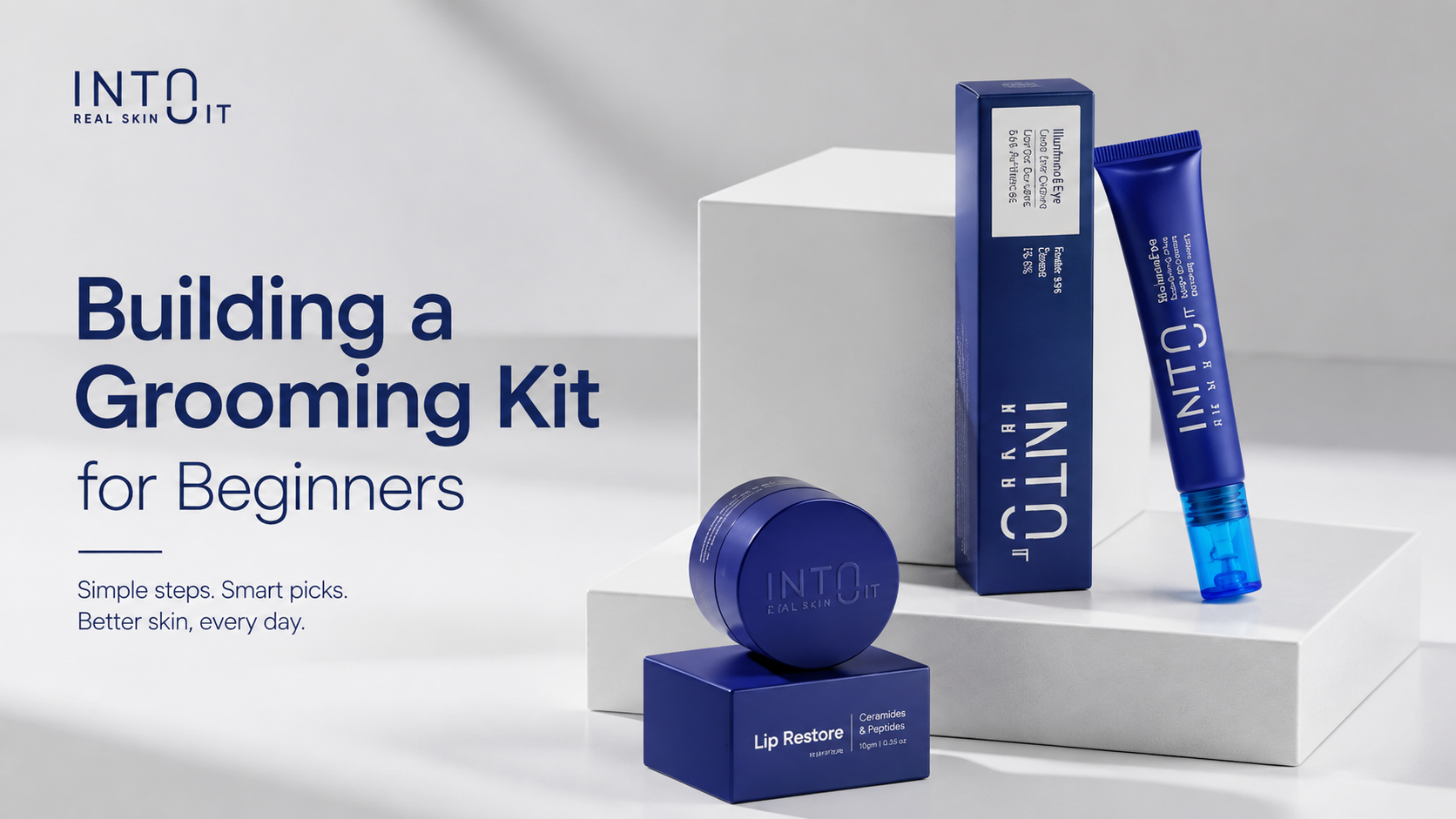
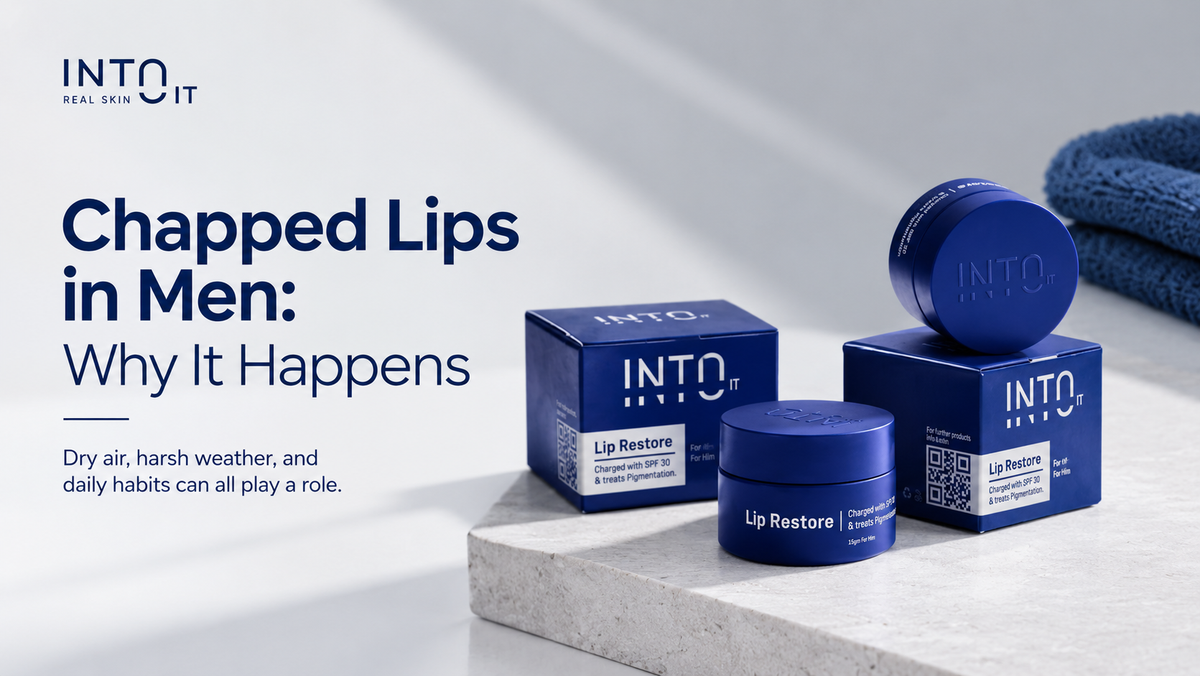
The INTOIT Lip Restore SPF Lip Balm is formulated to address the three specific vulnerabilities of lip tissue simultaneously.
UV Protection from Three Filters:
-
Ethylhexyl Methoxycinnamate: UVB filter, blocking the rays that cause DNA damage and sunburn in lip tissue
-
Ethylhexyl Salicylate: secondary UVB filter providing complementary coverage
-
Bis-Ethylhexyloxyphenol Methoxyphenyl Triazine: broad-spectrum filter covering both UVA and UVB, addressing the collagen-degrading UVA rays that cause premature ageing alongside the DNA-damaging UVB rays
Together, these three filters deliver SPF 30 broad-spectrum protection, the minimum recommended by dermatologists for high-risk sun exposure areas, which lips qualify as given their complete absence of natural UV protection.
Active Hydration:
-
Hyaluronic Acid: draws moisture into the lip tissue and holds it there, directly replacing the function that the absent sebaceous glands cannot provide
-
Squalane: a lightweight oil that mimics natural skin lipids, providing the occlusive sealing function that prevents the moisture the hyaluronic acid draws in from evaporating
Barrier Repair:
-
Ceramide NP: directly replenishes the structural lipid barrier of lip tissue, supporting the integrity of the thin lip surface that daily UV and dryness progressively degrade
-
Tocopheryl Acetate (Vitamin E): antioxidant protection against the free radicals generated by UV exposure that UV filters cannot entirely block
Soothing Support:
-
Peppermint Oil: provides mild cooling relief to irritated or chapped lips and supports circulation in the lip area
-
Natural waxes (Hydrogenated Castor Oil, Helianthus Annuus Seed Wax, Rhus Succedanea Fruit Wax, Oryza Sativa Bran Wax): provide structure, help the formula adhere to the lip surface, and contribute to the barrier film
How to Use the Lip Balm Correctly
Morning application: Apply as the last step of your morning skincare routine before leaving the home. This ensures SPF protection is in place from the moment of outdoor exposure.
Reapplication: UV filters degrade with time, physical removal from eating, drinking, and speaking, and are not regenerated unless reapplied. For extended outdoor exposure, reapply every two hours. For office workers with minimal direct sun exposure, morning application with midday reapplication is generally sufficient.
Night application: Night application provides no UV protection, which is appropriate since UV exposure is absent during sleep. The Hyaluronic Acid, Squalane, and Ceramide NP absorb deeply overnight, providing the most uninterrupted barrier repair and hydration the formula delivers. Night application is particularly valuable for men whose lips are already dry or showing the early signs of chronic dryness.
Full lip surface: Apply across the entire lip surface including the corners and the lip border where the skin transitions from lip to facial skin. The lower lip border is the highest UV exposure zone and the area most commonly affected by actinic changes.
Common Questions About Lip Care for Men
Is it true that glossy lip products make UV damage worse?
Yes. Specialist dermatologists at Harvard University have raised warnings about non-SPF glossy lip products, which enhance the optical passage of UV rays, increasing their penetration into lip tissue rather than blocking it. A non-SPF gloss can be actively worse than no product in terms of UV exposure because it concentrates the UV radiation on the tissue rather than absorbing or reflecting it. This is a specific reason why SPF-containing products, not simply any moisturising lip product, are the appropriate choice for daily use.
Can regular moisturising lip balm without SPF substitute for SPF lip balm?
For hydration, yes. For UV protection, no. A non-SPF lip balm addresses the moisture vulnerability of lip tissue but provides no protection against the UV-driven collagen degradation, actinic changes, and long-term tissue deterioration that represent the more serious lip care concerns. Using a non-SPF lip balm exclusively is better than using nothing, but leaves the most consequential vulnerability entirely unaddressed.
How common is actinic cheilitis really?
It is more common than awareness suggests. It is particularly prevalent in men with outdoor occupations or high recreational sun exposure. The threefold increased risk of lip cancer in Canadian farmers cited in research reflects how significantly cumulative outdoor UV exposure translates to lip cancer risk. For Indian men in outdoor occupations or with significant outdoor commute time, the risk profile is meaningfully elevated.
Does lip care actually reverse existing damage?
Active SPF protection prevents further UV-driven damage from accumulating from the point of consistent use. The hydrating and ceramide-based ingredients support the structural integrity of existing lip tissue. What SPF protection cannot do is reverse collagen that has already been degraded by years of UV exposure. The case for starting daily SPF lip protection early is the same as the case for starting facial sunscreen early: prevention is more effective than repair, and the damage that has already accumulated cannot be fully reversed topically.
Does skin tone affect lip cancer risk?
Yes, though differently than for facial skin. Lighter skin tones have higher lip cancer risk overall. However, all skin tones are at meaningful risk because lip tissue has very little melanin regardless of overall skin tone. The partial UV protection that higher melanin provides to the facial skin of Indian men does not extend to their lips in any meaningful way.
Final Word
Lip care for men is not a cosmetic indulgence. It is a functional health practice grounded in the specific and significant structural vulnerabilities of lip tissue. No oil glands. No meaningful UV protection from melanin. Tissue three to five cell layers thin versus fifteen or more elsewhere on the face. The combination creates the most vulnerable area of the face to both daily moisture loss and UV-driven damage.
Daily SPF lip balm use reduces the risk of actinic cheilitis and lip cancer. Consistent hydration with appropriate humectant and occlusive ingredients addresses the structural moisture vulnerability that causes the chronic dryness, cracking, and progressive lip tissue deterioration that most men attribute simply to weather or genetics.
Both are preventable. Both require the same simple daily habit. Apply in the morning. Reapply through the day. Apply at night for overnight repair.
Try the INTOIT Lip Restore SPF Lip Balm here.