
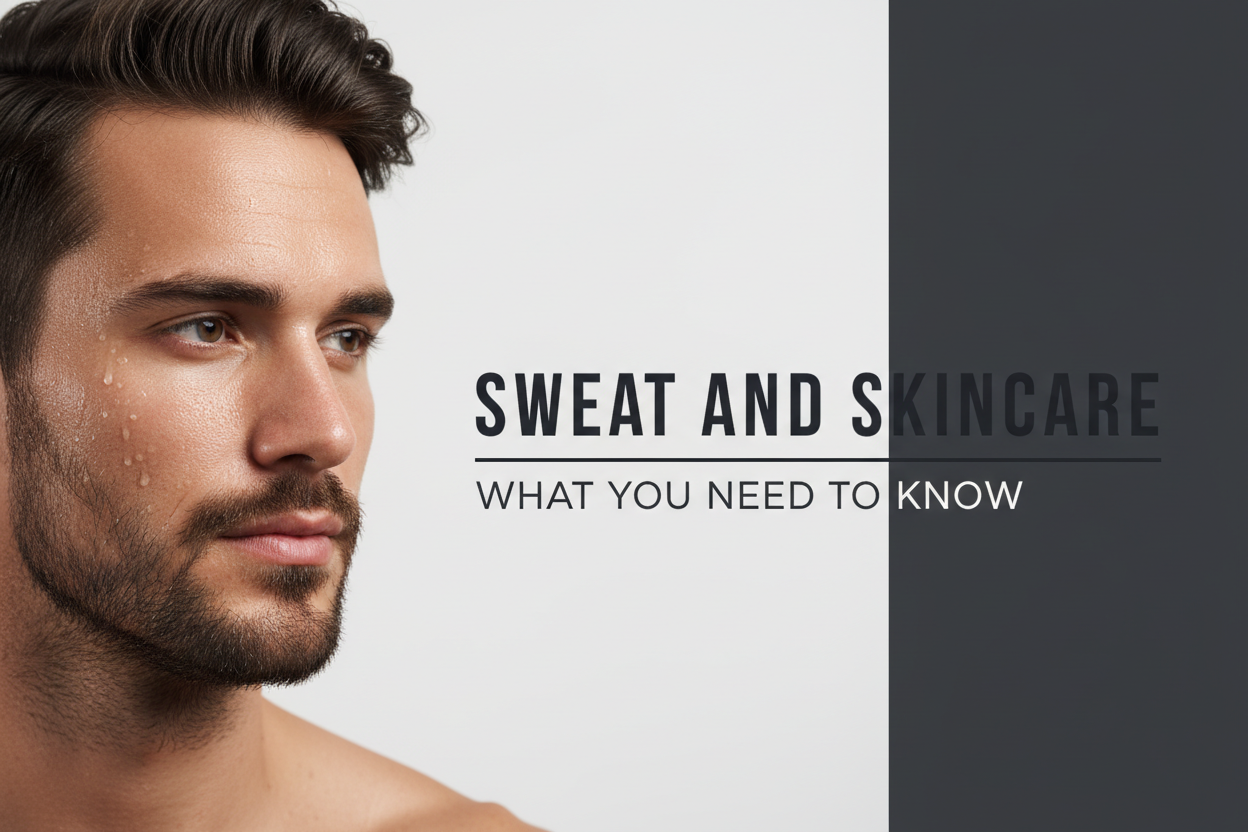
Sweat and Skincare: What You Need to Know
India is hot for most of the year. Indian men sweat more, and more often, than men in cooler climates. This makes understanding what sweat actually does to the skin one of the most practically important pieces of skincare knowledge for Indian men specifically.
Most men assume sweat directly causes breakouts. The actual science is more specific than that, and understanding the real mechanism changes what you should actually do about it.
This guide explains exactly what sweat is, what it does and does not do to your skin, why certain conditions make sweat-related skin problems worse, and the specific routine that prevents them.
What Sweat Actually Is
Sweat is produced by two different types of glands, and understanding the distinction matters because they behave differently in relation to skin problems.
Eccrine glands are found all over the body and release clear, watery sweat directly onto the skin surface to regulate body temperature. This is the sweat produced during exercise, heat exposure, and most daily activity. Apocrine glands are concentrated in areas like the underarms and groin, and they empty into hair follicles, producing a thicker, milky sweat, particularly during stress or hormonal shifts.
This distinction matters for the face specifically. Eccrine sweat pores and hair follicles are anatomically separate. Acne forms inside hair follicles, not sweat ducts, when excess oil, dead skin cells, and Cutibacterium acnes bacteria become trapped. Eccrine sweat, the kind produced during workouts and heat exposure, does not flow through hair follicles and therefore does not directly cause acne on its own.
This is an important clarification. Sweat itself is not the direct cause of breakouts. What happens after sweat sits on the skin is.
How Sweat Actually Leads to Breakouts
Sweat itself does not directly cause acne, but it creates the conditions for breakouts. When sweat sits on the skin, it mixes with oil, dead skin cells, and bacteria, trapping all of it against and within pores.
The pH Disruption Mechanism
Sweat is mostly water but contains salt and other compounds that affect the skin's natural pH balance. Healthy skin maintains a slightly acidic pH, generally in the range of 4.5 to 5.5. A clinical study published in PMC found that bactericidal activity from compounds naturally present in sweat, including dermicidin and nitrites, occurs optimally at pH 5.5. As skin pH rises above this optimal range, the population and activity of acne-causing bacteria including C. acnes and Staphylococcus aureus increases, while the effectiveness of the skin's own antimicrobial peptides diminishes.
In practical terms, this means sweat sitting on the skin for extended periods can shift the local skin pH away from the range where the skin's natural antibacterial defences work best. This change can disrupt the skin's protective barrier and make it more susceptible to irritation and acne.
The Heat and Sebum Mechanism
Heat from exercise or environmental temperature causes oil glands to increase sebum production. Combined with sweat acting almost like glue, holding dead skin cells against pores while bacteria thrive in the warm, moist environment created by sweating, the conditions for follicular blockage compound quickly. Bacteria on the skin surface multiply rapidly in this environment and can infiltrate the clogged follicles, leading to the inflammatory response that produces visible breakouts.
The Friction Mechanism: Acne Mechanica
This is a specific and distinct mechanism from typical acne, and it is particularly relevant for men who exercise, wear helmets for commuting, or work in physically demanding jobs.
Acne mechanica is a specific type of breakout caused by the combination of occlusion, heat, friction, and pressure on the skin, particularly when sweating skin is in repeated contact with tight clothing, helmet straps, headbands, or sports equipment. The dilation of pores from heat makes it easier for bacteria, oil, and dead skin cells to collect and clog them. The friction itself irritates the already-vulnerable follicle.
For Indian men, this is directly relevant to anyone who wears a helmet for daily commuting, a common practice for two-wheeler riders across Indian cities. The combination of heat, sweat, and helmet strap friction along the jawline and forehead creates ideal conditions for acne mechanica in exactly this population.
The Mechanical Mixing Mechanism
Sweat can mix with sunscreen, any residual skincare products, and environmental pollution sitting on the skin surface. This combination can clog pores more aggressively than sweat alone. Wiping sweat away with an unclean towel or cloth, rather than properly cleansing, can also spread bacteria across the face rather than removing it.
Why Indian Conditions Amplify These Mechanisms
India's combination of heat, humidity, and pollution creates a more intense version of every mechanism described above compared to cooler, drier climates.
In humid environments, sweat is less likely to evaporate efficiently. This extends the time that sweat sits on the skin, which extends the window during which pH disruption, bacterial proliferation, and pore-clogging mixing can occur. Indian monsoon and summer months, characterised by high humidity alongside high temperatures, create conditions where sweat lingers on the skin for longer periods than in drier climates, even with the same volume of sweat produced.
Daily pollution exposure means the sweat-pollution mixing mechanism operates constantly for Indian men in urban environments, not just during exercise. A daily commute in heat and traffic produces sweat that mixes with the particulate pollution already on the skin, compounding the pore-blocking effect beyond what sweat alone would cause.
The Sweat Management Routine
Cleanse Promptly After Sweating
The single most consistently recommended intervention across dermatological sources is prompt, thorough cleansing after any significant sweating, whether from exercise, heat, or a long commute. The longer sweat, oil, and bacteria sit on the skin, the more time they have to interact and cause the pH disruption and follicular blockage described above.
The INTOIT Claytox Cleanser is well suited to this need. Bentonite at 3 percent and Kaolin at 3 percent draw sweat-trapped sebum and pollution out of pores through adsorption. Gluconolactone at 2 percent provides gentle exfoliation that removes the dead skin cells that sweat loosens and that would otherwise contribute to clogging. Chamomile and Aloe Vera soothe any post-sweat skin sensitivity from heat exposure.
For Indian men, this means cleansing is not only a morning and night habit. Anyone who sweats significantly during the day, whether from a commute, outdoor work, or exercise, benefits from cleansing as soon as practically possible after that sweating episode, not waiting until the next scheduled cleanse.
Avoid Wiping with Unclean Materials
Wiping sweat away during the day with a dirty handkerchief, the same towel used multiple times, or your hands, can spread bacteria across the face rather than removing it. If you need to manage sweat during the day before a proper cleanse is possible, use a clean tissue or a fresh section of a clean towel, patting rather than rubbing.
Moisturize After Cleansing
Hydrated skin maintains the protective barrier function more effectively than dehydrated skin. After cleansing post-sweat, apply a lightweight, non-comedogenic moisturizer to restore hydration without clogging pores.
The INTOIT Maximalist Moisturizer is appropriate for this purpose. Its lightweight formulation with Ceramide NP, AP, and EOP rebuilds the barrier lipids that sweating and the associated pH disruption can deplete, while its non-comedogenic profile means it does not contribute to the pore-blocking risk that sweat already creates.
Choose Breathable, Clean Clothing for Commutes and Exercise
For Indian men commuting in heat, particularly those wearing helmets, choosing breathable fabrics reduces the friction and occlusion components of acne mechanica. A clean cotton layer under helmets or tight gear creates a barrier against friction and pressure while absorbing sweat and allowing some airflow, directly addressing two of the four triggers of acne mechanica.
Changing into clean clothing after significant sweating, rather than remaining in sweat-soaked fabric, reduces the prolonged occlusion and bacterial growth that contribute to body and jawline breakouts in particular.
Apply Serum for Inflammation and Sebum Management
The serum step addresses the inflammatory and sebum-related consequences of frequent sweating, particularly relevant for Indian men who sweat daily due to climate.
The INTOIT 6x Complex Face Serum contains Niacinamide at 2 percent, which has documented anti-inflammatory activity and sebum-regulating properties. For men who sweat frequently and are managing the elevated sebum production that heat stimulates, consistent Niacinamide use reduces the baseline sebum level that combines with sweat to create clogging conditions.
Sweat and Lip Care
A detail often overlooked: heavy sweating, particularly during exercise involving mouth breathing, dehydrates the lips faster than normal facial sweating affects the rest of the face. After significant sweating, applying the INTOIT Lip Restore SPF Lip Balm restores the moisture that mouth breathing and evaporative cooling depletes from lip tissue, which has no oil glands to compensate naturally.
When Sweat-Related Skin Issues Need More Than Routine Adjustment
For most Indian men, the combination of prompt cleansing and the right product choices manages sweat-related skin concerns effectively. However, if breakouts are persistent, painful, cystic, or not responding to consistent care over several weeks, this may indicate a different underlying cause, including hormonal factors or a bacterial or fungal condition that requires dermatological evaluation rather than topical adjustment alone.
For sensitive skin that reacts to standard cleansing post-sweat, gentle, fragrance-free alternatives like hypochlorous acid sprays are sometimes recommended by dermatologists as an interim measure between full cleanses, particularly for athletes or men who sweat multiple times in a day. This is not a replacement for thorough cleansing but can be a useful addition for managing surface bacteria between full routine sessions.
Common Questions About Sweat and Skincare
Does sweating actually detox the skin?
This is a common claim without strong scientific support. Sweat's primary function is thermoregulation, not detoxification. The body's detoxification processes occur primarily through the liver and kidneys. Sweating does not meaningfully remove toxins from the skin. What sweating does affect is the skin surface environment, in ways that require active management rather than passive benefit.
Should I avoid working out if I have acne-prone skin?
No. Exercise has documented benefits for overall skin health through improved circulation and reduced chronic cortisol levels, both of which support skin function. The relevant factor is what you do during and after exercise, not whether you exercise. Prompt post-workout cleansing, breathable clothing, and avoiding prolonged sweat-soaked clothing address the acne risk without requiring you to avoid exercise.
Is it true that sweat from spicy food is worse for skin than sweat from exercise?
The composition of sweat is broadly similar regardless of the trigger, whether exercise, heat, or spicy food, which can trigger gustatory sweating in some people. The skin-level effects, pH disruption, mixing with sebum and bacteria, depend more on how long the sweat remains on the skin and the surrounding conditions than on what triggered the sweating itself.
Does sweating during sleep, such as from heat or fever, affect skin the same way?
Yes, the same mechanisms apply. Sweat produced overnight, particularly in unconditioned rooms during Indian summer nights, sits on the skin for an extended period before morning cleansing, which can extend the window for the pH disruption and bacterial proliferation mechanisms described above. Morning cleansing as the first step of the day, rather than skipping straight to other steps, is particularly important for men who sweat during sleep.
Does humidity make sweat-related breakouts worse even without intense exercise?
Yes. In humid environments, sweat evaporates less efficiently, extending the time it spends on the skin surface even at lower sweat volumes than would cause the same dwell time in a dry climate. This is one reason monsoon season and Indian summer months are commonly associated with more frequent breakouts even among men who are not increasing their exercise intensity during these periods.
Can sweat make existing acne worse or just create new breakouts?
Both. The pH disruption and bacterial environment that sweat creates can aggravate existing inflamed lesions, increasing redness and discomfort, while also creating the conditions for new comedones and breakouts to form in previously unaffected pores. This is why consistent post-sweat cleansing benefits both active acne management and breakout prevention simultaneously.
Final Word
Sweat itself does not directly cause acne. What creates the problem is what happens after sweat sits on the skin: pH disruption that favours acne-causing bacteria, heat-stimulated sebum mixing with trapped dead cells, and friction from clothing or equipment compounding the occlusion.
For Indian men, who sweat more frequently and for longer durations due to the climate, this is not an occasional concern. It is a daily one. The response is straightforward and does not require avoiding activity or accepting breakouts as inevitable.
Cleanse promptly after significant sweating. Choose breathable fabrics for commutes and exercise. Moisturize to maintain the barrier that sweat and pH disruption compromise. Use active ingredients like Niacinamide to manage the sebum and inflammation that frequent sweating amplifies.
Sweating is a normal, healthy physiological process. Managing what happens to your skin afterward is what determines whether it stays that way.
Shop the INTOIT routine for managing sweat-prone skin here.