How Do I Know If I Have Combination Skin?
You likely have combination skin if:
- Your T-zone (forehead, nose, chin) gets shiny fast, but your cheeks stay dry
- A product that works on your forehead feels drying on your cheeks
- Your skin changes a lot between humid and dry weather
If this sounds like you, the problem is not your skin. It is that most sunscreens are not made to handle two different needs at once.
Why Do Most Sunscreens Fail Combination Skin?
Oil-control sunscreens often dry out your cheeks and jawline. Rich, hydrating sunscreens often clog your T-zone and add shine. Using the same sunscreen everywhere rarely feels right on every part of your face.
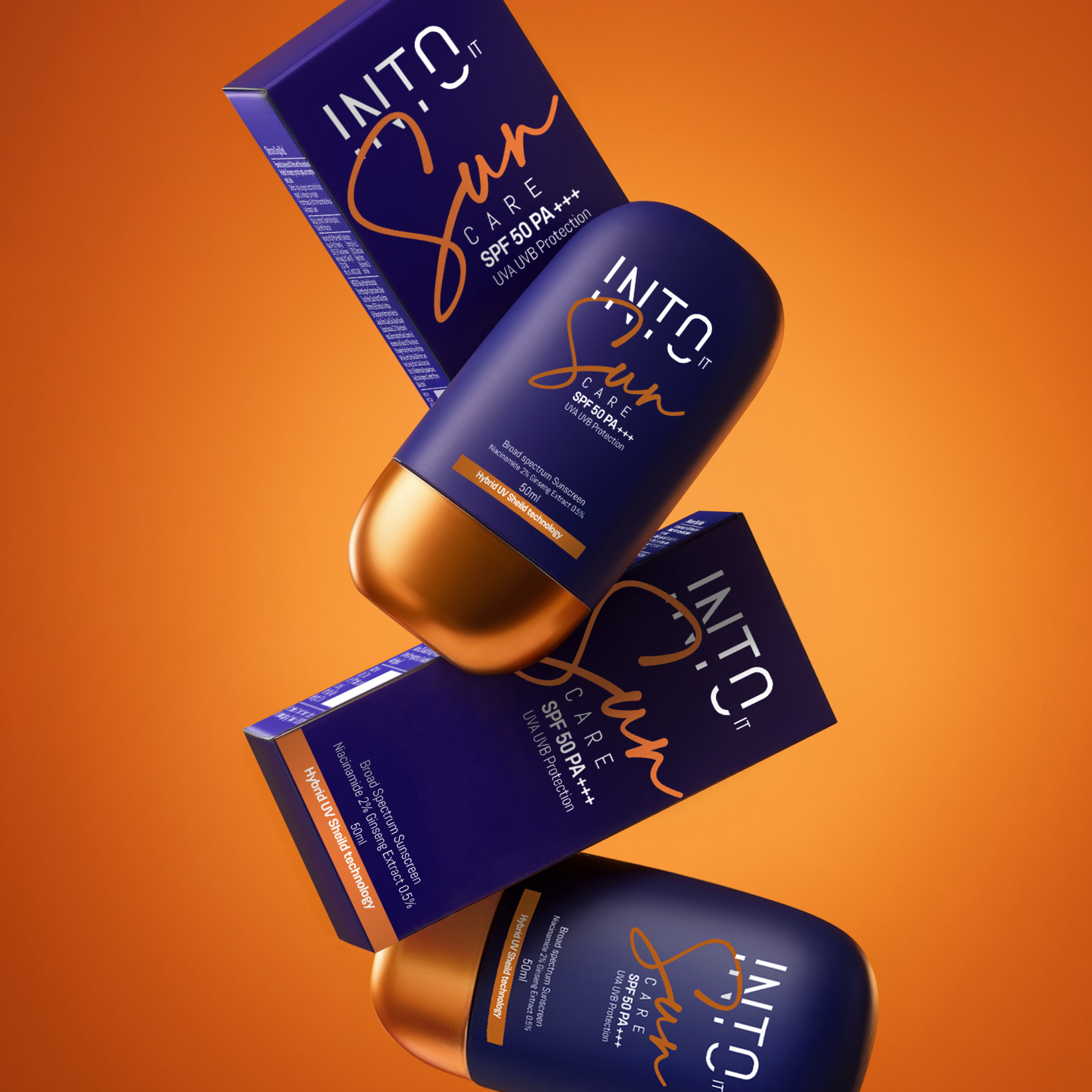
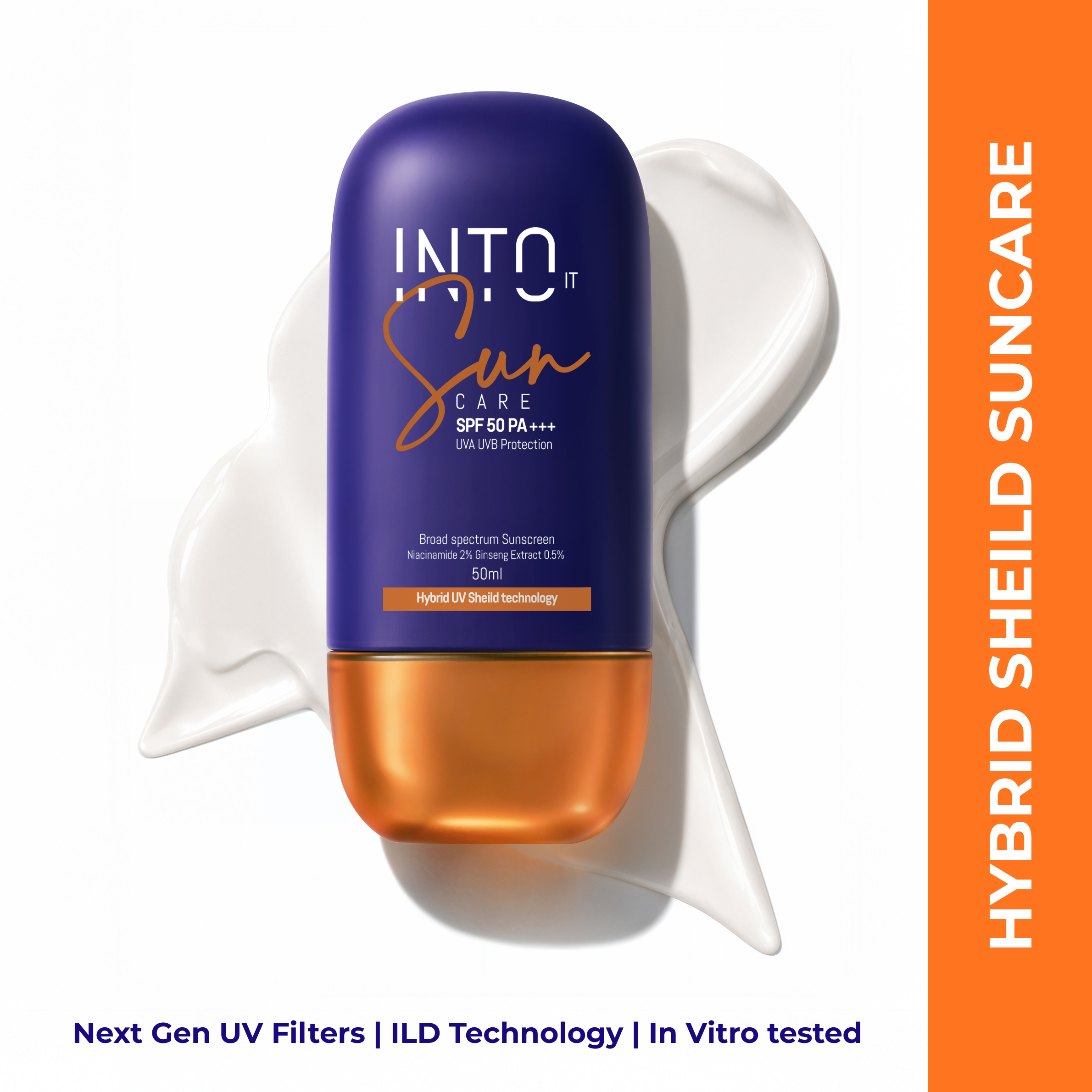
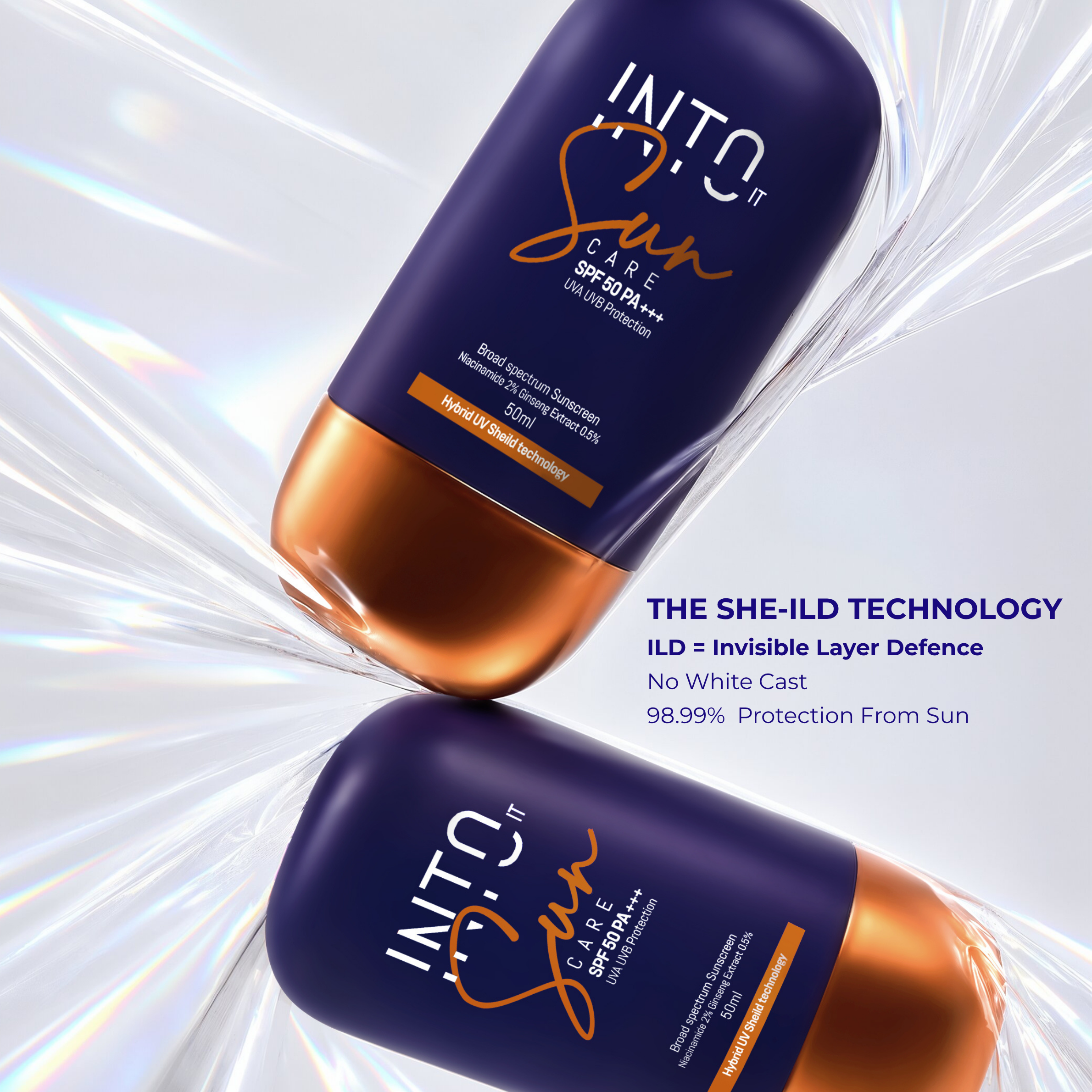
How Does HYBRID SHEILD Balance Combination Skin?
Bifida Ferment Lysate: helps strengthen your skin's outer layer. This helps the drier areas, like your cheeks, without feeling heavy.
Alpha-Glucan: helps keep skin bacteria balanced. This helps stop oily areas from breaking out.
Sepicalm VG: cools and calms your whole face at once, so oily and dry areas do not feel different from each other.
Together, these help your whole face feel balanced, not just one part of it.
How Should I Apply Sunscreen on Combination Skin?
Use the same amount of sunscreen on your whole face. Do not add extra on your T-zone. Do not skip your cheeks. If your cheeks still feel dry later, a small dab of moisturizer on that spot is fine. Reapply every three to four hours if you are outside.
What Should I Use Along With This Sunscreen?
The INTOIT Maximalist Moisturizer is made to hydrate dry areas without adding oil to your T-zone. Use it before HYBRID SHEILD each morning.
Want both in one buy? The Suncare Combo bundles sun protection and repair together at a better price.
Who Should Use This Sunscreen?
- Men with an oily T-zone and normal or dry cheeks
- Anyone who has used two different products just to feel comfortable
- Men whose skin changes with the seasons
What Mistakes Do People With Combination Skin Make?
Buying an oil-control sunscreen just because of a shiny T-zone often leaves cheeks feeling dry. Putting extra product only on the T-zone is another common mistake. Using two different sunscreens on one face usually looks patchy. And using the exact same routine all year, without changing your moisturizer, can leave skin uneven as the seasons change.


 ₹699.30 with code FREEDOM30